


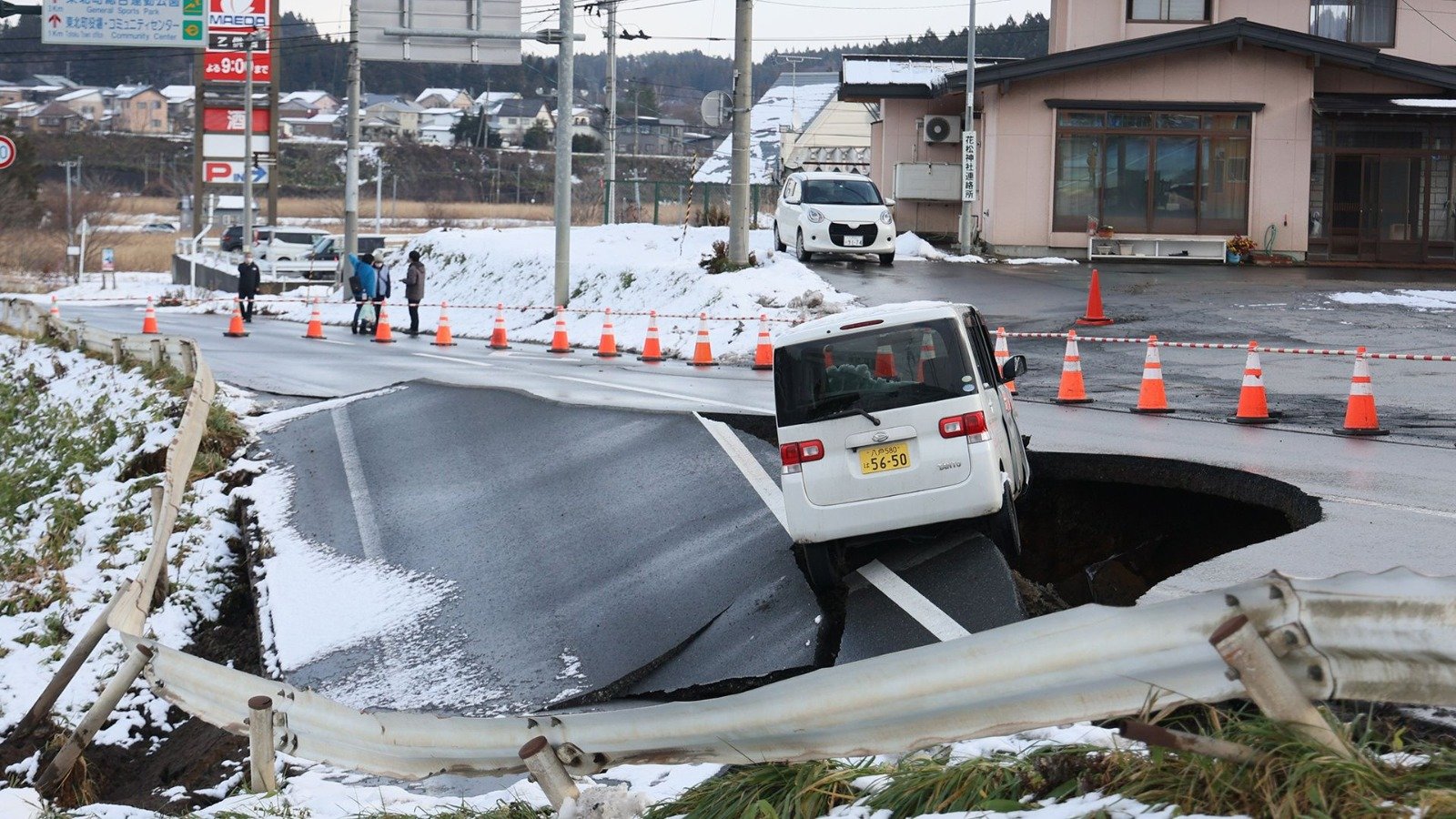
Japan is in rapid response mode after a massive 7.5-magnitude earthquake struck the country’s coastal region, leaving at least 33 people injured and triggering widespread concerns over infrastructure stability, aftershocks, and potential tsunami risks. The quake, which rattled homes, disrupted transport systems, and knocked out power in several districts, has prompted authorities to initiate one of the country’s largest emergency assessment operations in recent years.
According to Japan Meteorological Agency (JMA), the earthquake originated at a relatively shallow depth, making its impact far more severe. Residents across multiple prefectures reported intense shaking that lasted nearly a minute, sending people rushing out of buildings and prompting automatic shutdowns of trains, factories, and nuclear facilities as part of Japan’s strict safety protocols.
While no major structural collapse has been reported so far, preliminary visuals show cracked roads, damaged water pipelines, fallen signboards, and shattered windows across several cities. Emergency workers are currently inspecting older buildings and densely populated neighborhoods where the risk of structural weakness is higher.
Local hospitals have admitted 33 injured individuals, most of whom sustained fractures, cuts, or head injuries due to falling objects. Authorities believe this number may rise as communication in remote areas stabilizes and more people come forward seeking medical assistance.
Prime Ministerial offices announced that a dedicated disaster-response task force has been activated, coordinating with regional governments, fire departments, and self-defense forces. Helicopters have been deployed for aerial surveys, especially along the coastline, where fears of potential landslides remain.
Public transportation remains heavily disrupted, with numerous train lines temporarily suspended and airports conducting runway safety inspections. Utility companies are working to restore electricity and water in affected pockets, though officials warn that full restoration could take time due to safety checks.
Despite the scale of the quake, Japan’s early-warning systems and reinforced building codes once again played a critical role in minimizing casualties. Schools and public institutions quickly executed evacuation protocols, and tsunami alerts, though later lifted, helped coastal communities move to safer zones promptly.
As aftershocks continue across the region, Japan’s emergency agencies are urging residents to stay vigilant, avoid unstable structures, and keep emergency supplies accessible. With the nation now focused on recovery and evaluation, officials are expected to release a detailed damage report in the coming days.


