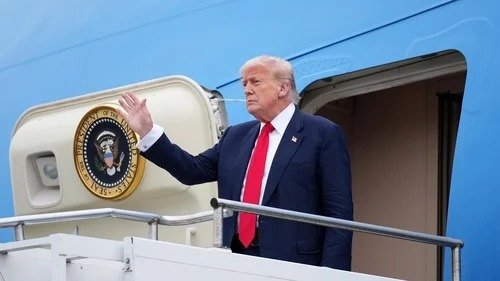
At the White House on Thursday, US President Donald Trump launched the ambitious “Trump Gold Card” immigration programme, designed to fast-track legal residency and offer a path to citizenship for wealthy individuals and companies willing to invest in retaining top global talent. The initiative which requires a $1 million contribution for individuals and $2 million for corporate sponsorship was presented as a way to attract and keep highly skilled graduates from leading universities.
In his address, Trump highlighted the challenges faced by international students, particularly from countries like India and China, who complete their higher education in the United States only to be forced to return home due to restrictive visa rules. Calling it “a shame” that these talented graduates must “go back to India, China, France” after finishing their studies, Trump said the Gold Card would help companies secure and retain these individuals, eliminating what he described as a “ridiculous” barrier in the current immigration system.
Trump framed the Gold Card as “somewhat like a Green Card but with big advantages,” arguing that companies can recruit from top schools such as Harvard, MIT and Wharton, and through this programme ensure their hires can remain in the US long-term without the uncertainty of traditional visa categories.
The new policy is being pitched not only as a tool to keep talent in the United States but also as an economic driver, with proceeds expected to raise billions for federal use. While critics question the fairness and inclusivity of a dollar-priced immigration pathway, the Trump administration asserts it will help bolster US competitiveness in a global race for skilled professionals.