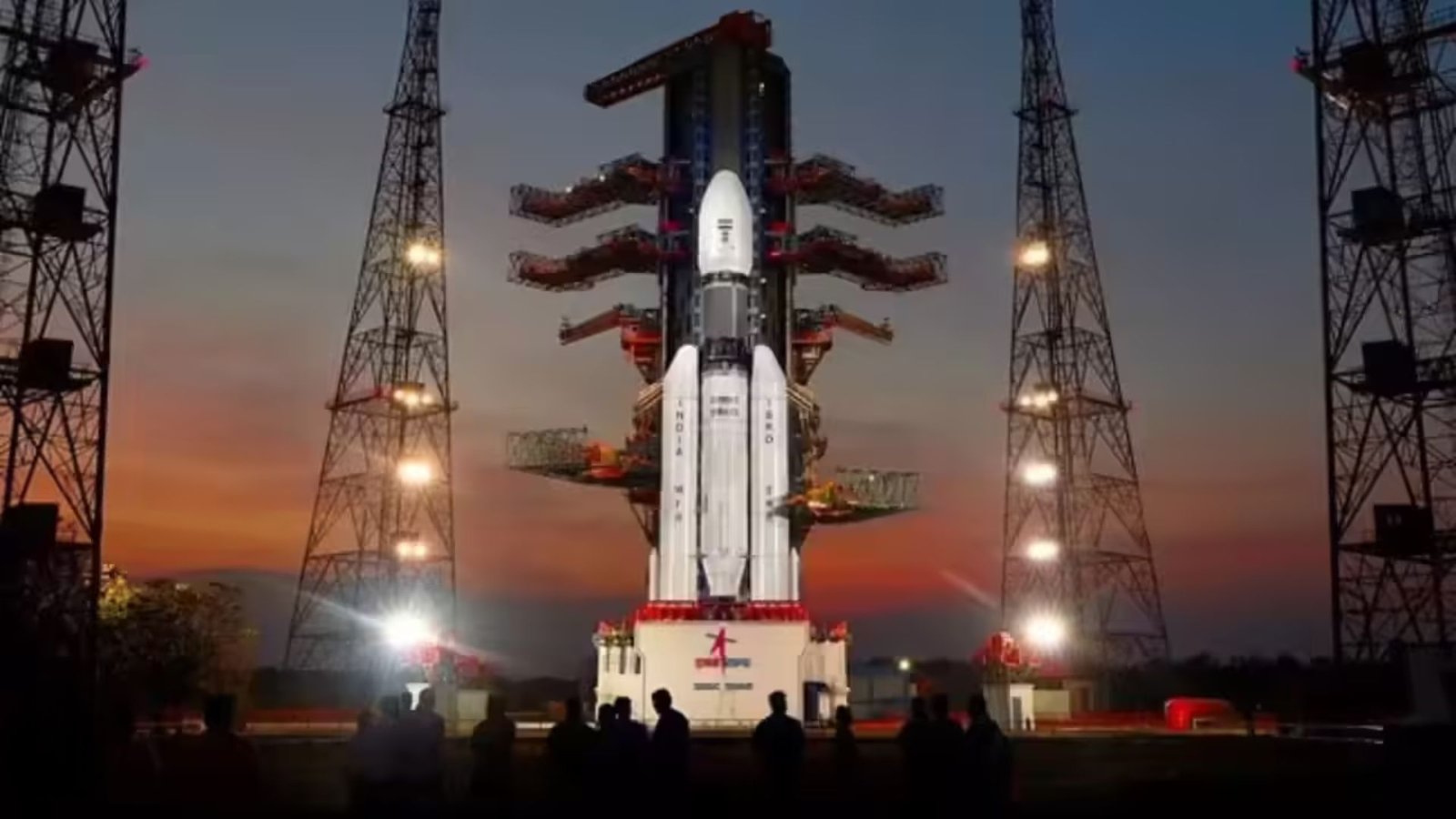
The Indian Space Research Organisation (ISRO) is preparing for its next ambitious chapter in lunar exploration, with Chandrayaan-4 and Chandrayaan-5 missions likely to be launched by 2028, according to a major update shared by ISRO Chairman. Building on the historic success of Chandrayaan-3, which made India the first country to achieve a soft landing near the Moon’s south pole, these upcoming missions aim to deepen scientific understanding and strengthen India’s position in global space research.
Chandrayaan-4 is expected to be a technologically complex mission with a primary focus on lunar sample return. Unlike Chandrayaan-3, which demonstrated safe landing and surface mobility, Chandrayaan-4 is likely to involve multiple modules, including a lander, ascender, orbiter, and a return module. The mission’s objective will be to collect lunar soil and rock samples and safely bring them back to Earth for detailed analysis. If successful, India would join an elite group of nations that have accomplished lunar sample return missions.
Chandrayaan-5, on the other hand, is being envisioned as an even more advanced mission, possibly in collaboration with international partners. Early indications suggest it could involve a larger rover with enhanced scientific instruments, enabling extended exploration of the Moon’s surface. The mission may focus on studying lunar geology, mineral composition, and the presence of water ice in permanently shadowed regions critical for future human exploration and potential lunar habitation.
The ISRO Chairman highlighted that these missions are part of a long-term roadmap rather than isolated launches. After Chandrayaan-3, ISRO has been carefully evaluating mission data to refine landing technologies, propulsion systems, and autonomous navigation capabilities. Lessons learned from previous missions will play a crucial role in ensuring higher reliability and mission success for Chandrayaan-4 and 5.
These upcoming lunar missions also align with India’s broader space ambitions, including Gaganyaan, the country’s first human spaceflight programme, and future interplanetary missions. Scientific data from Chandrayaan-4 and 5 is expected to contribute significantly to global lunar research, especially in understanding the Moon’s evolution and its potential as a resource base.
The proposed 2028 timeline indicates that ISRO is prioritising precision and preparedness over speed. Developing complex sample return mechanisms and advanced rovers requires rigorous testing and validation. By taking a measured approach, ISRO aims to minimise risks while pushing technological boundaries.
As global interest in the Moon intensifies, with several countries planning lunar missions in the coming decade, India’s Chandrayaan-4 and Chandrayaan-5 could play a defining role. If executed as planned, these missions will not only expand scientific knowledge but also reinforce India’s reputation as a reliable and innovative space power on the world stage.