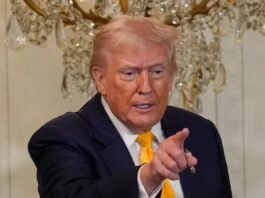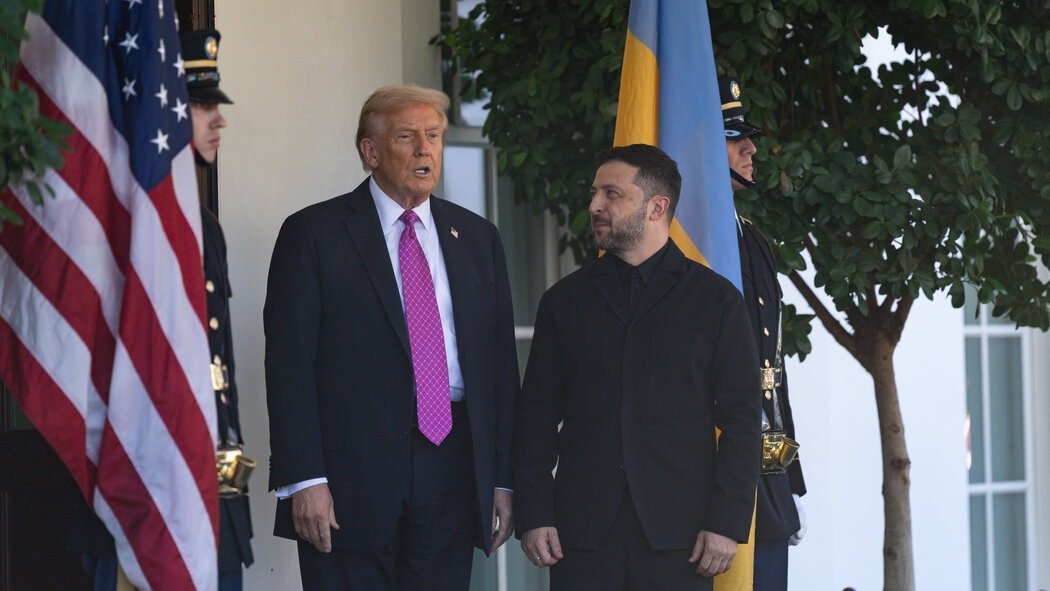
Global oil prices climbed early on Monday after investors weighed the outcome of high-level talks between U.S. President Donald Trump and Ukrainian President Volodymyr Zelenskiy on how to end the Russia-Ukraine war. Brent crude futures edged up about 1.04% to around $61.27 a barrel, while U.S. West Texas Intermediate (WTI) saw a similar uptick to approximately $57.32 per barrel reversing some of the recent losses seen at the end of last week.
The Trump-Zelenskiy meeting, held at Trump’s Mar-a-Lago estate, yielded no definitive breakthrough on territorial disputes such as the Donbas region, but Trump described the discussions as progressing toward a clearer framework that could become evident “in a few weeks.” Market participants interpreted this lack of decisive resolution as prolonging uncertainty around the conflict’s impact on oil supply and sanctions regimes a factor that has supported crude prices amid mixed signals on peace prospects.
Investors have been sensitive to such diplomatic developments because a potential peace settlement could ease Western sanctions on Russian energy exports, increasing supply and pressuring prices. Last week crude had fallen sharply more than 2% as optimism around the possibility of a peace deal grew, with traders anticipating a weaker geopolitical risk premium.
In addition to the Ukraine negotiations, broader Middle East tensions and supply-side concerns are also influencing market sentiment. Ongoing geopolitical friction in the region continues to pose a risk of disruptions, which traditionally supports oil prices by adding a risk premium to futures contracts.
Despite the recent uptick, analysts note that oil benchmarks remain in a broader range, reflecting the balancing forces of ample supply growth from major producers and geopolitical risk factors. Some forecasts suggest WTI may continue to trade within the $55–$60 range unless there’s a clear shift in either the peace process or tangible supply disruptions.
In summary, Monday’s gains in oil prices reflect investors’ cautious assessment of international diplomacy and geopolitical risk, as well as ongoing uncertainty about how or whether negotiations between world leaders will materially change the supply landscape in 2026.