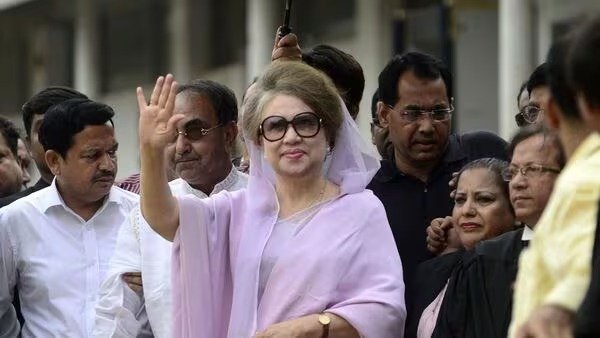
Bangladesh is in mourning following the death of Khaleda Zia, the country’s first female prime minister and one of its most influential political figures, who passed away at the age of 80. Her death marks the end of a defining chapter in Bangladesh’s political history, shaped by decades of rivalry, resilience, and leadership at the highest level of government.
Khaleda Zia rose to prominence in the late 1970s after the assassination of her husband, President Ziaur Rahman, the founder of the Bangladesh Nationalist Party (BNP). Entering politics at a time when leadership roles for women were rare in South Asia, she defied convention and emerged as a formidable force. In 1991, she made history by becoming Bangladesh’s first woman prime minister, a milestone that reshaped the country’s political landscape and inspired generations of women to participate in public life.
Over her long career, Khaleda Zia served as prime minister three times, leading the country during periods of democratic transition, political unrest, and economic reform. Her leadership was marked by strong nationalism, an emphasis on parliamentary democracy, and a firm political style that earned both loyal supporters and fierce critics. Under her tenure, Bangladesh witnessed key developments in infrastructure, education, and rural programs, while also navigating intense political polarization.
Khaleda Zia’s legacy is inseparable from her long-running rivalry with Sheikh Hasina, another towering figure in Bangladeshi politics. The rivalry between the two women often described as one of the most enduring political duels in the world defined the nation’s politics for decades, shaping elections, governance, and public discourse. Despite their differences, both leaders played pivotal roles in normalizing women’s leadership in a region traditionally dominated by men.
In her later years, Khaleda Zia’s political career was overshadowed by legal battles and health issues. She spent extended periods out of active politics, and her declining health became a matter of national and international attention. Supporters frequently called for humanitarian consideration, while critics maintained that legal processes must take their course. Her passing closes a long and often contentious chapter of modern Bangladeshi politics.
Tributes have poured in from political leaders, party workers, and citizens across the country. Many have described her as a symbol of perseverance and strength, acknowledging her role in shaping Bangladesh’s democratic journey. Messages of condolence have also come from abroad, recognizing her historic position as a woman who broke barriers in South Asian leadership.
For millions of Bangladeshis, Khaleda Zia was more than a politician she was a defining presence in national life for over four decades. Her speeches, campaigns, and political battles left a lasting imprint on the country’s institutions and public memory.
As Bangladesh reflects on her passing, debates over her legacy are likely to continue. Yet her place in history is secure: Khaleda Zia will be remembered as a pioneer who altered the course of Bangladeshi politics and proved that women could lead a nation at its most critical moments.