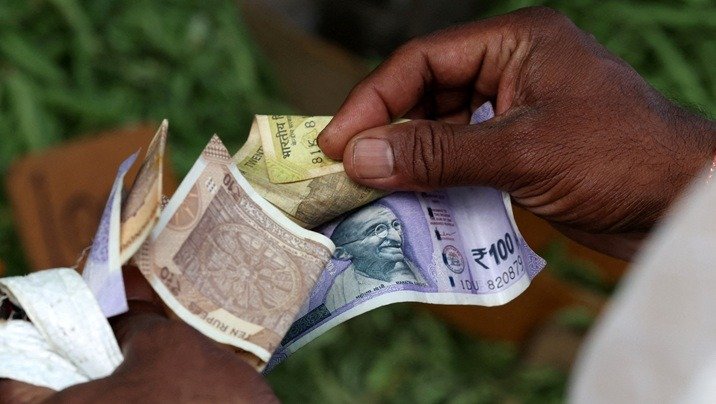
The Indian rupee has entered 2026 on a weak footing, following its sharpest annual decline in three years, as a mix of global headwinds and domestic challenges continued to weigh on the currency. After a turbulent 2025 marked by volatility in global markets, the rupee’s struggle highlights the growing pressures faced by emerging market currencies in an uncertain economic environment.
In 2025, the rupee depreciated significantly against the US dollar, driven largely by a stronger greenback, persistent foreign fund outflows, and concerns around global interest rates. As the new year begins, currency traders and economists suggest that the factors which hurt the rupee last year have not fully eased, keeping sentiment cautious.
One of the biggest drags on the rupee has been the US Federal Reserve’s tight monetary stance. Higher interest rates in the US have strengthened the dollar and reduced the appeal of riskier assets, prompting foreign investors to pull money out of emerging markets like India. Foreign portfolio investors (FPIs) were net sellers of Indian equities and debt for much of 2025, adding pressure on the local currency.
At the same time, rising crude oil prices have compounded the problem. As a net importer of oil, India’s trade balance is sensitive to energy costs. Higher oil prices widen the current account deficit, increasing dollar demand and weakening the rupee. Analysts warn that any further spike in crude prices could pose fresh challenges for the currency in early 2026.
Domestic factors have also played a role. While India remains one of the fastest-growing major economies, concerns over fiscal discipline, inflation management, and corporate earnings growth have influenced investor confidence. Although the Reserve Bank of India (RBI) has actively intervened in the foreign exchange market to smooth volatility, it has allowed the rupee to adjust gradually rather than defending any fixed level.
Currency experts note that the RBI’s strategy has helped prevent disorderly moves but has not been enough to reverse the broader trend. India’s foreign exchange reserves remain healthy, offering a buffer against extreme swings, yet policymakers are balancing the need for stability with the reality of global market forces.
Looking ahead, the rupee’s path in 2026 will depend on several key developments. Any signs of rate cuts by the US Federal Reserve could ease dollar strength and provide relief to emerging market currencies. Similarly, sustained economic growth in India, coupled with stable inflation and renewed foreign inflows, could help the rupee regain some lost ground.
However, risks remain. Geopolitical tensions, uncertainty in global trade, and fluctuations in commodity prices could continue to drive volatility. Market participants expect the rupee to remain range-bound but vulnerable in the near term, with sharp moves possible in response to global data and policy signals.
For Indian businesses, a weaker rupee presents a mixed picture. Exporters may benefit from improved competitiveness, while import-dependent sectors face higher costs. For consumers, currency weakness can translate into imported inflation, particularly in fuel and electronics.
As 2026 begins, the rupee’s shaky start serves as a reminder of the interconnected nature of global finance. While India’s economic fundamentals remain relatively strong, the currency’s performance will hinge on how effectively the country navigates external shocks and restores investor confidence in the months ahead.