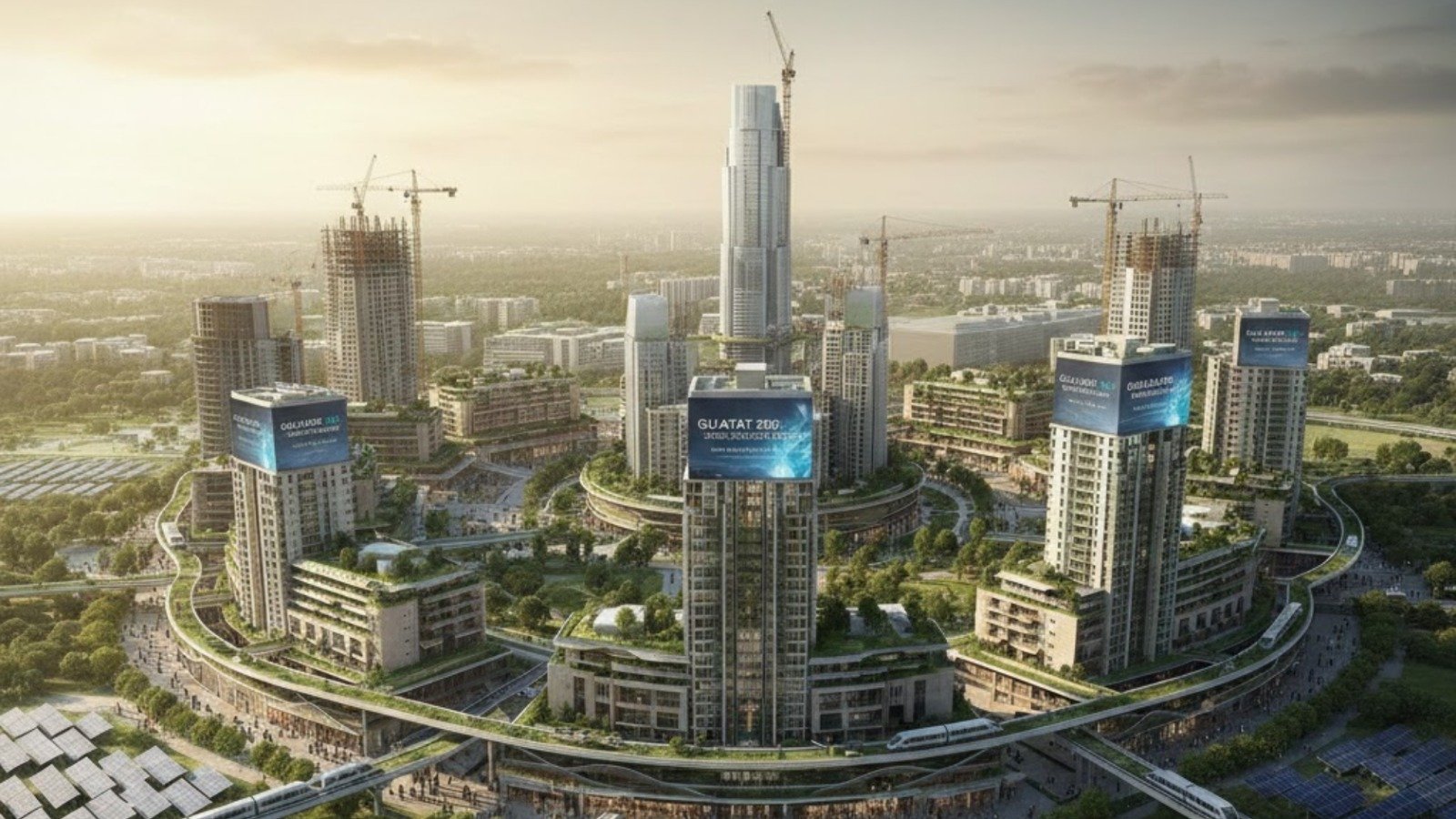
In a major urban development push, the Gujarat government has announced plans to develop five satellite towns by 2030, aimed at easing population pressure on the state’s rapidly growing cities and promoting more balanced, sustainable urbanisation. The initiative is expected to reshape Gujarat’s urban landscape by distributing economic activity, housing, and infrastructure beyond overcrowded city centres.
According to officials, the proposed satellite towns will be developed near major urban hubs such as Ahmedabad, Surat, Vadodara, Rajkot, and Gandhinagar, though final locations will be determined after detailed feasibility studies. These towns are envisioned as self-sustained urban clusters, equipped with residential areas, commercial zones, industrial parks, social infrastructure, and modern transport connectivity.
Decongesting Overburdened Cities
Gujarat’s major cities have witnessed rapid population growth over the past two decades, driven by industrialisation, job opportunities, and migration. While this growth has boosted the state’s economy, it has also strained infrastructure, housing, traffic systems, and civic amenities.
The satellite town strategy aims to reduce congestion, control unplanned urban sprawl, and improve quality of life by creating alternative growth centres. Officials say this approach will help manage rising real estate prices and reduce pressure on water, transport, and sanitation systems in existing cities.
Integrated Planning and Infrastructure
Unlike traditional townships, the new satellite towns will follow integrated urban planning principles. The government plans to prioritise efficient public transport, wide road networks, green spaces, and sustainable utilities such as renewable energy and water recycling.
Connectivity will be a key focus, with proposed links to parent cities through expressways, metro extensions, suburban rail, and rapid bus systems. This will allow residents to commute easily while encouraging businesses to set up operations closer to their workforce.
Economic and Employment Hubs
The satellite towns are also expected to function as new economic engines. Dedicated zones for IT, manufacturing, logistics, education, and healthcare are likely to be included, creating local employment opportunities and reducing the need for long-distance commuting.
State officials indicated that the development will involve public-private partnerships (PPP) to attract investment, bring in global expertise, and accelerate project execution. Urban development authorities will oversee planning and regulation to ensure orderly growth.
Aligning With Gujarat’s Growth Vision
The move aligns with Gujarat’s broader vision of becoming a highly urbanised, economically diversified state while maintaining liveability standards. By 2030, urban areas are expected to house a significantly larger share of the state’s population, making planned expansion essential.
Urban planners have welcomed the announcement, noting that satellite towns if implemented effectively can help avoid the pitfalls of unchecked urbanisation seen in other regions. However, they also stress the importance of timely execution, affordable housing, and strong governance to ensure success.
Looking Ahead
With the 2030 target in sight, detailed project reports, land acquisition processes, and stakeholder consultations are expected to begin soon. If executed as planned, Gujarat’s five satellite towns could serve as a model for other states grappling with rapid urban growth offering a blueprint for decongested, connected, and sustainable cities of the future.