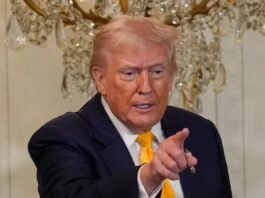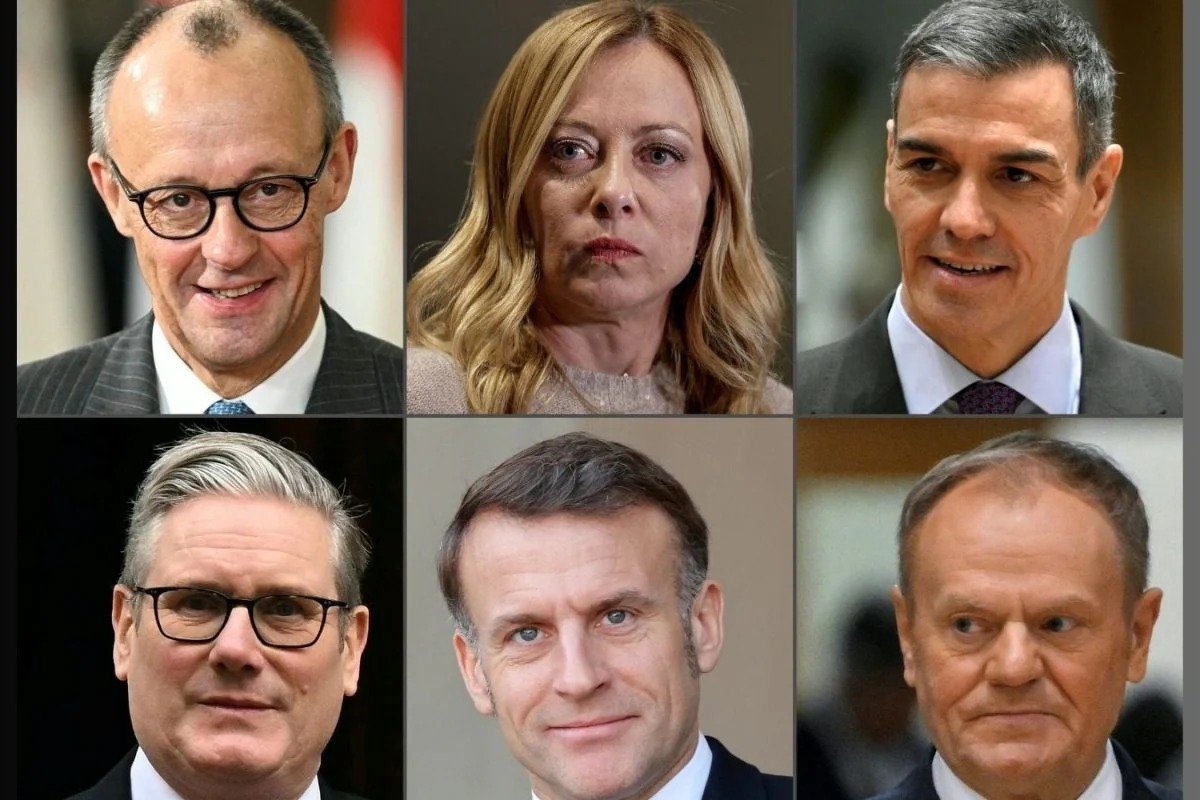
Former US President Donald Trump’s renewed suggestion that the United States could seek control over Greenland has triggered sharp reactions across Europe, with at least seven European leaders publicly rejecting the idea and reaffirming their commitment to sovereignty, international law, and collective defence. The comments have reignited a diplomatic controversy that first surfaced during Trump’s presidency and now appear to be resurfacing amid shifting global power dynamics.
Trump, speaking recently to supporters and in media interactions, once again floated the idea that Greenland a semi-autonomous territory of Denmark was strategically vital to US national security and should be brought under American control. While he stopped short of outlining specific steps, his remarks were forceful enough to prompt immediate responses from European capitals.
Strong Pushback From Europe
Leaders from Denmark, France, Germany, Norway, Finland, Sweden, and the Netherlands were quick to react, sending a unified message: Greenland is not for sale, takeover, or coercion.
Denmark’s leadership reiterated that Greenland’s future lies in the hands of its people alone. Officials stressed that any discussion about Greenland must respect its autonomous status and Denmark’s sovereignty. “This is not a question of strategic bargaining,” one senior Danish figure said. “It is about democracy and self-determination.”
France and Germany echoed similar sentiments, warning that any attempt to pressure a European territory would be unacceptable. A French government spokesperson said Europe would not tolerate threats economic or political against its members or territories. Germany underlined that borders and sovereignty are not negotiable in the modern world.
“We Will Not Stop Defending Them”
Nordic leaders were particularly vocal, given Greenland’s geographic and cultural ties to the region. Norway and Sweden both emphasised that security in the Arctic must be based on cooperation, not unilateral ambition. Finland highlighted that international law and Arctic agreements already provide frameworks for managing strategic interests without undermining sovereignty.
A senior European leader summed up the mood by stating, “We will not stop defending them our values, our territories, and the rules-based order.” The comment has since been widely quoted as emblematic of Europe’s collective stance.
Why Greenland Matters
Greenland’s strategic importance has only grown in recent years. Its location in the Arctic makes it critical for missile defence, satellite tracking, and emerging shipping routes as polar ice melts. The island is also believed to hold vast reserves of rare earth minerals, making it increasingly attractive amid global competition over critical resources.
The United States already maintains a military presence at Pituffik Space Base (formerly Thule Air Base) in Greenland, a fact European leaders noted as evidence that strategic cooperation does not require ownership or control.
Diplomatic and Political Implications
Analysts say Trump’s comments are likely aimed at energising his political base and projecting strength on foreign policy. However, they also risk straining transatlantic relations at a time when unity is seen as crucial, particularly in the face of global instability and great-power competition.
European diplomats privately expressed concern that such rhetoric could undermine trust within NATO, even if no concrete policy follows. “Words matter,” said one EU official. “They shape perceptions and alliances.”
A Clear European Red Line
The swift and coordinated response from Europe suggests that Greenland has become a symbolic red line not just about territory, but about resisting a return to power politics and territorial bargaining.
As Trump’s statements continue to draw attention, Europe’s message remains consistent and unequivocal: Greenland’s status is not up for debate, and any challenge to it will be met with unity, resolve, and defence of international norms.