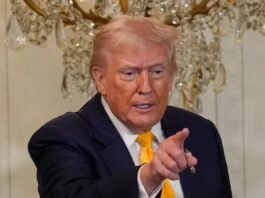
Former US President Donald Trump has once again stirred international debate by asserting that the United States needs to “own” Greenland in order to prevent Russia and China from expanding their influence in the Arctic. The remarks, delivered during a recent public appearance, revive an idea Trump first floated during his presidency and quickly abandoned after strong pushback from Denmark and Greenland.
Trump framed Greenland as a strategic necessity, arguing that its geographic position makes it central to future global security. “If we don’t take it, someone else will,” he said, warning that Russia and China are actively seeking opportunities to expand their Arctic footprint. According to Trump, US ownership of Greenland would be the most effective way to secure American and allied interests in the region.
Why Greenland Matters
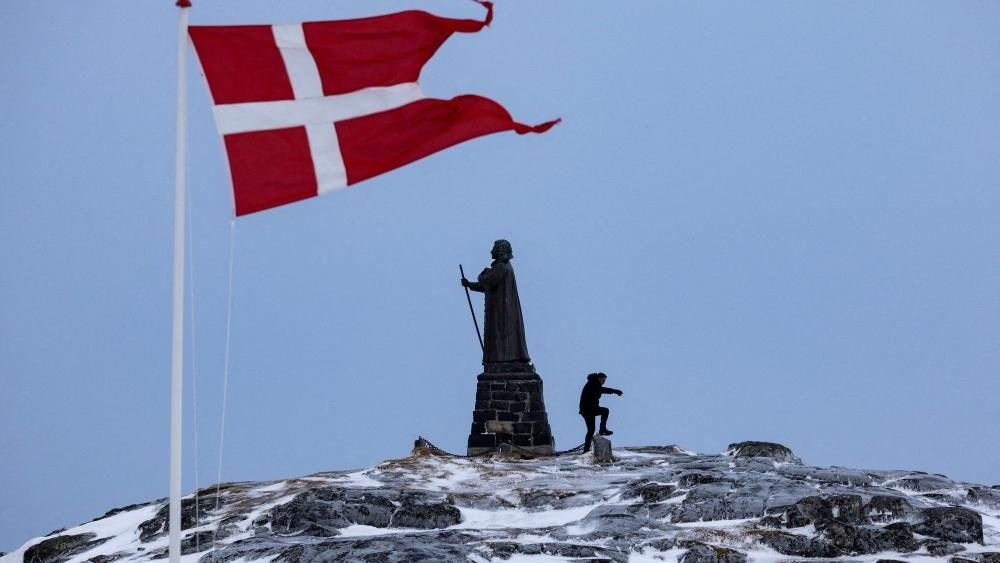
Greenland, an autonomous territory within the Kingdom of Denmark, occupies a critical position between North America and Europe. As Arctic ice continues to melt due to climate change, new shipping routes are opening, and access to untapped natural resources including rare earth minerals has become increasingly feasible. These developments have intensified global competition in the region.
The United States already maintains a significant military presence on the island through the Pituffik Space Base (formerly Thule Air Base), which plays a key role in missile warning, space surveillance, and Arctic defence. Trump, however, suggested that existing agreements may not be sufficient to counter long-term strategic ambitions from rival powers.
Russia and China in the Arctic
Russia has dramatically expanded its Arctic military infrastructure over the past decade, reopening Soviet-era bases and investing heavily in icebreakers and missile systems. China, despite not being an Arctic nation, has declared itself a “near-Arctic state” and has increased its presence through scientific research missions, investments, and strategic partnerships.
Trump cited these developments as justification for stronger US control over Greenland, arguing that economic partnerships and defence agreements may not be enough in an era of intensifying great-power competition.
Strong Rejection From Europe
Trump’s comments were met with renewed resistance from European leaders. Danish officials reiterated that Greenland is not for sale and that its future will be decided solely by the people of Greenland. European leaders have consistently emphasised that sovereignty, territorial integrity, and international law cannot be overridden by strategic arguments.
Greenland’s leadership has also made clear that while it welcomes cooperation and investment, it rejects any notion of foreign ownership or coercion.
Political Signal or Policy Proposal?
Analysts are divided over whether Trump’s remarks represent a serious policy position or are primarily aimed at reinforcing his tough-on-security image. Many point out that purchasing or “owning” Greenland would be diplomatically impossible and legally complex, especially given NATO alliances and Denmark’s status as a close US partner.
Security experts argue that the US already enjoys extensive strategic access to Greenland through defence agreements and does not need ownership to counter Russian or Chinese influence. “Influence in the Arctic comes from cooperation, not colonisation,” one analyst noted.
A Debate That Refuses to Fade
As Arctic geopolitics continue to evolve, Greenland’s importance is only growing. Trump’s renewed comments ensure the island remains at the centre of global strategic discussions, even as Denmark, Greenland, and other European nations continue to draw a firm line against any idea of US ownership.
For now, Greenland remains autonomous, Denmark remains sovereign, and Trump’s proposal remains controversial raising more diplomatic questions than realistic solutions.