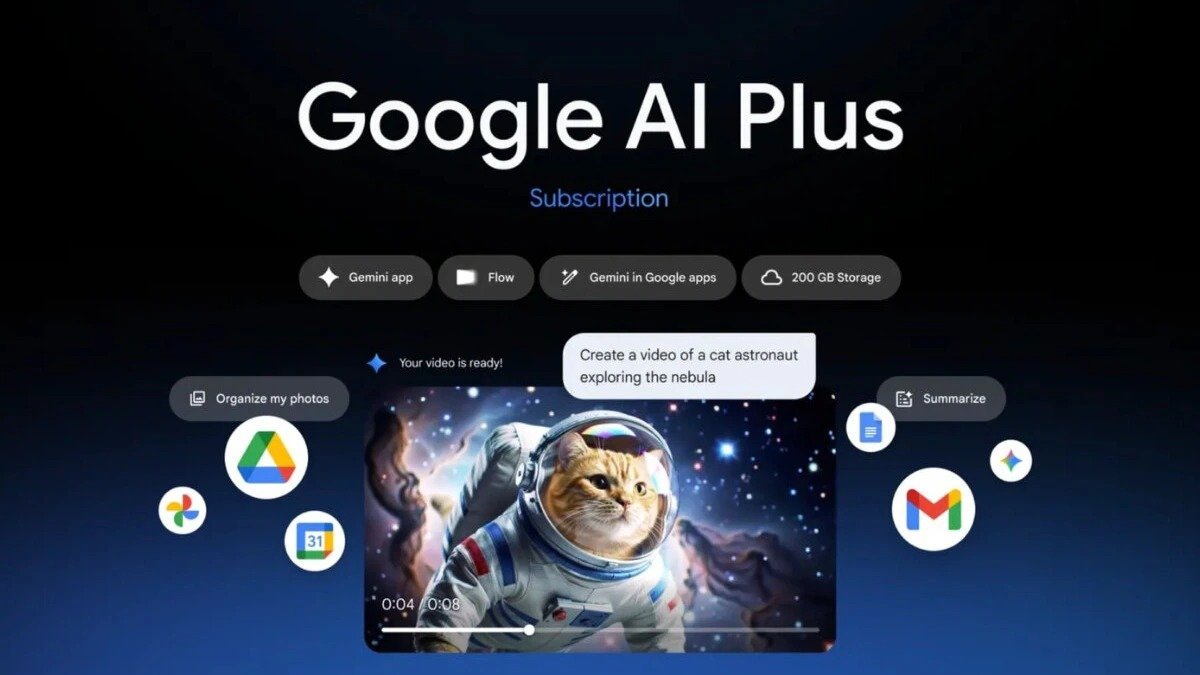
Google has significantly widened the global reach of its artificial intelligence ambitions by rolling out its AI Plus subscription to 35 new international markets, marking one of the company’s biggest consumer-facing AI expansions to date. The move underscores Google’s intent to make advanced AI tools a core part of everyday digital life, while also strengthening its position in the intensifying global race for AI dominance.
The AI Plus subscription is designed as a premium tier that gives users access to Google’s most advanced AI-powered features across its ecosystem. This includes enhanced versions of its generative AI models, smarter productivity tools, and deeper AI integration across services such as Search, Gmail, Docs, Sheets, and Photos. With this expansion, millions of new users across Europe, Asia, Latin America, and parts of Africa can now subscribe to tools that were previously limited to a smaller set of countries.
At the heart of AI Plus is Google’s push to move beyond experimental AI features and turn them into reliable, everyday utilities. Subscribers gain access to advanced writing and summarisation tools, AI-assisted research capabilities, and more powerful creative features for images and content generation. Google is positioning the offering as a practical upgrade for professionals, students, creators, and businesses that want to save time and work more efficiently.
The global rollout comes as competition in the AI subscription space heats up. Rivals such as OpenAI, Microsoft, and Anthropic have already introduced paid tiers for advanced AI access, conditioning users to pay monthly fees for higher performance, priority access, and exclusive tools. By expanding AI Plus to 35 new markets at once, Google is signaling that it does not intend to cede ground especially outside the United States, where future user growth is expected to be strongest.
Pricing and features may vary by region, but Google has emphasized affordability and localization as key pillars of the expansion. The company has tailored language support, cultural context, and region-specific use cases to make AI Plus relevant beyond English-speaking markets. This includes better multilingual capabilities and improved handling of local queries, documents, and workflows an area where Google believes it has a natural advantage due to its long-standing expertise in global search and translation.
Strategically, the expansion also reflects Google’s broader shift toward AI as a revenue engine, rather than just a free enhancement layered onto existing products. While advertising remains the company’s largest source of income, subscriptions like AI Plus offer a more predictable, recurring revenue stream particularly important as AI infrastructure costs continue to rise.
Industry analysts see the move as both offensive and defensive. On one hand, it helps Google monetise its heavy investments in AI research and computing infrastructure. On the other, it protects its core products especially Search from being disrupted by standalone AI platforms that could change how users find information online.
For users, the expansion means greater access to tools that can draft emails, summarise long documents, brainstorm ideas, analyse data, and even assist with coding all within familiar Google apps. As AI becomes more embedded in daily workflows, the line between “optional upgrade” and “essential tool” is likely to blur.
With AI Plus now live in 35 additional markets, Google has made it clear that its AI future is not limited by geography. The next phase will test whether global users see enough value to subscribe and whether Google can maintain its AI edge as competition accelerates worldwide.