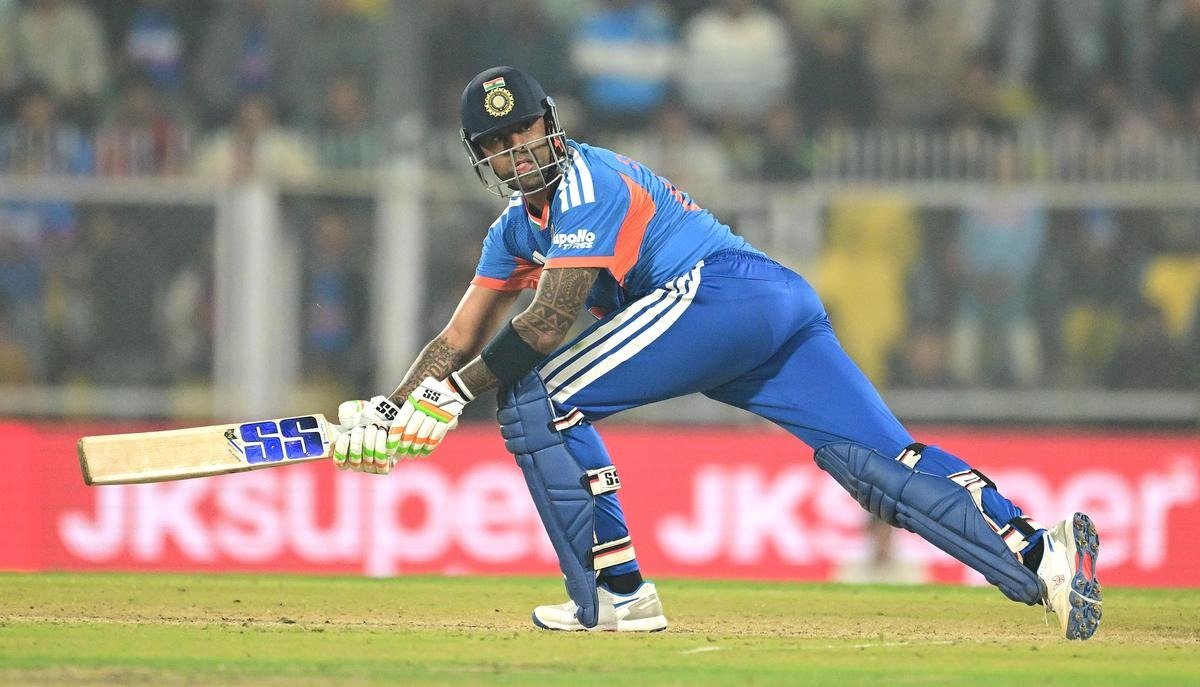
New Zealand produced a commanding all-round performance to defeat India by 50 runs in the fourth T20I, as Mitchell Santner’s incisive spell dismantled the Indian batting line-up and helped the hosts level momentum in the series. Chasing a target of 216, India were bowled out for 165, never quite recovering from a collapse triggered by disciplined bowling and sharp fielding from the Black Caps.
After winning the toss, New Zealand opted to bat first and made full use of favorable conditions. Their top order laid a solid platform, mixing aggression with smart shot selection. The middle overs proved crucial as New Zealand accelerated without losing momentum, pushing India onto the back foot. Regular boundaries and effective strike rotation ensured the scoreboard pressure kept mounting, and the hosts eventually posted an imposing total that looked well above par.
India’s bowlers struggled for consistency, especially at the death, where a flurry of late runs inflated the target. While there were flashes of control in the middle overs, the inability to stem the flow in the final phase proved costly. The fielding unit also had an off day, with a few misfields and missed chances further hurting India’s cause.
Chasing 216, India needed a strong start but lost early wickets, immediately tilting the contest in New Zealand’s favour. The top order failed to settle, and as pressure grew, risky shots led to soft dismissals. While a brief partnership in the middle overs offered hope, it was never sustained long enough to seriously challenge the target.
Mitchell Santner emerged as the standout performer with the ball, delivering a captain’s spell that broke India’s backbone. The left-arm spinner used subtle variations in pace and flight to great effect, picking up three crucial wickets and choking the run flow. His ability to strike at key moments ensured India could not build any meaningful partnerships.
New Zealand’s pace bowlers complemented Santner well, maintaining tight lines and forcing batters into errors. The bowling unit operated as a cohesive group, sticking to plans and exploiting the large boundaries. As wickets kept falling, India’s required run rate ballooned, turning the chase into an uphill battle well before the final overs.
Despite a few individual efforts, India’s batting lacked depth and composure under pressure. The lower order was unable to mount a late surge, and the innings eventually folded for 165, sealing a comprehensive victory for New Zealand with several overs to spare.
The result not only showcased New Zealand’s tactical sharpness but also underlined their strength in home conditions. For India, the defeat raises questions around batting adaptability and bowling execution in high-scoring games. With the series still alive, the focus now shifts to the final match, where both teams will look to finish strong and assert dominance ahead of future international assignments.