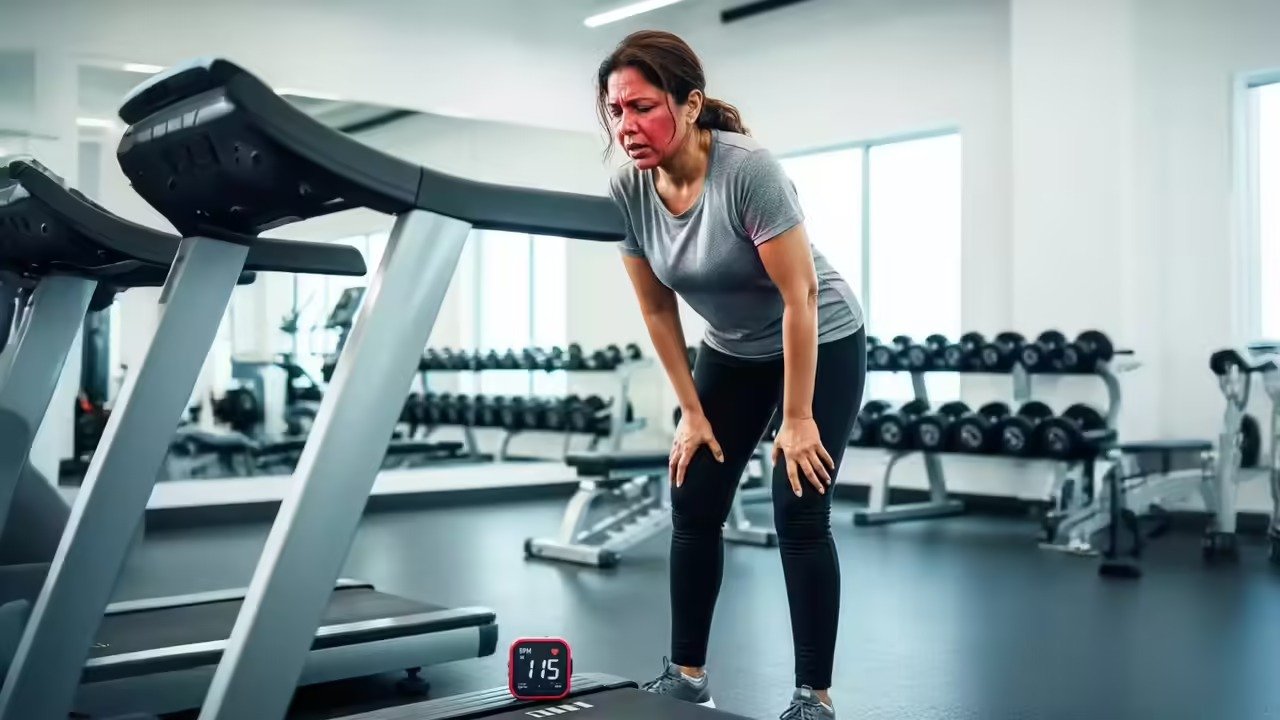
You eat well, sleep reasonably, and look healthy on paper yet a short workout leaves you dizzy, breathless, or completely wiped out. If this sounds familiar, you’re far from alone. An increasing number of young, otherwise healthy people are experiencing what doctors describe as exercise intolerance, a condition where the body struggles to cope with physical exertion despite no obvious illness.
Exercise intolerance isn’t laziness or lack of willpower. It’s a real physiological response where the heart, lungs, muscles, or nervous system fail to adapt efficiently to increased activity. For many, symptoms include extreme fatigue, rapid heartbeat, shortness of breath, muscle pain, lightheadedness, or even nausea during or after mild exercise. What’s confusing and often frustrating is that routine medical tests may come back normal.
One key reason is that fitness is not the same as metabolic or autonomic health. Some people may appear lean and active but still have underlying issues affecting oxygen delivery, energy production, or blood pressure regulation. Conditions such as iron deficiency (even without anemia), vitamin B12 deficiency, thyroid imbalance, or low vitamin D can quietly limit exercise capacity, especially in young adults.
Another increasingly recognised factor is autonomic nervous system dysfunction, including conditions like postural orthostatic tachycardia syndrome (POTS). In such cases, the body struggles to regulate heart rate and blood flow during physical stress, making exercise feel overwhelming. This is particularly common in young women and often goes undiagnosed for years.
Post-viral effects are also playing a major role. Since the COVID-19 pandemic, doctors have reported a rise in patients experiencing post-exertional malaise, where even light activity triggers disproportionate fatigue that can last days. Importantly, this can occur even after mild or asymptomatic infections, and not just in those with long COVID diagnoses.
Lifestyle factors contribute too. Chronic stress, irregular sleep, excessive caffeine use, under-fuelling, and overtraining can all push the body into a state where recovery is impaired. Social media-driven fitness culture often encourages high-intensity workouts without adequate rest, leading many young people to unknowingly exceed their body’s current capacity.
Mental health can’t be ignored either. Anxiety disorders can amplify physical sensations like breathlessness and palpitations during exercise, creating a feedback loop that makes workouts feel intolerable. This doesn’t mean symptoms are “all in the head” the physical distress is real, but the trigger may involve the brain-body connection.
Experts stress that the solution is not to push harder, but to reassess. A gradual, personalised approach to movement often starting with low-impact activities like walking, swimming, or yoga can help rebuild tolerance. Medical evaluation focusing on nutrition, hormones, heart rate response, and recovery patterns is equally important.
If exercise consistently makes you feel worse rather than better, it’s a signal worth listening to. Feeling intolerant to exercise doesn’t mean you’re weak it means your body is asking for a different kind of care. As awareness grows, doctors hope fewer young people will feel dismissed and more will get the support they need to move safely, confidently, and sustainably.