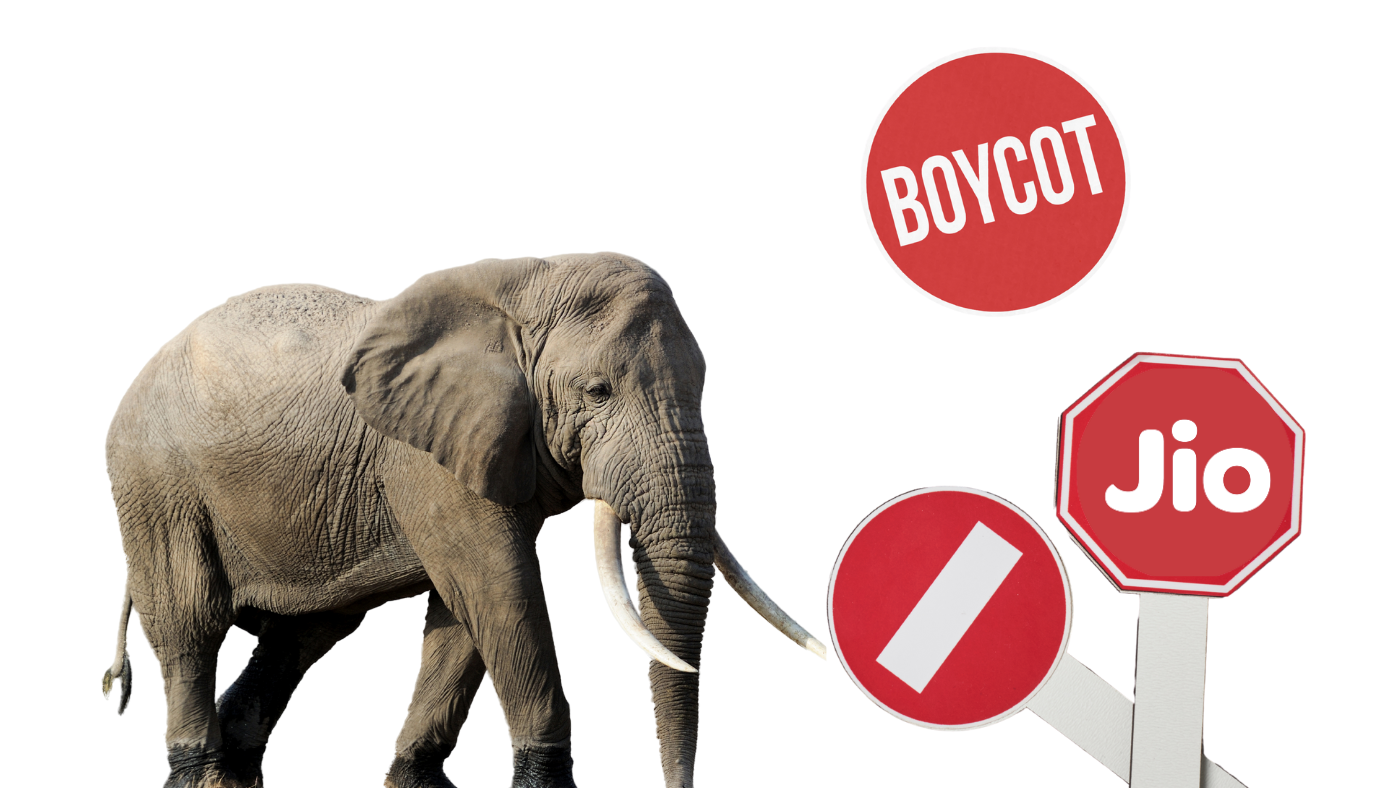
What started as a court order to relocate an elephant has snowballed into a full-blown rebellion in Kolhapur. At the center of it is Mahadevi, also known as Madhuri, a female elephant who lived at the centuries-old Jain Mutt in the village of Nandani, Shirol taluka.
She wasn’t just an animal. She was a part of the town’s identity, deeply woven into the religious and emotional fabric of the community. So, when she was moved to a rescue center in Gujarat, the locals didn’t just lose an elephant. They felt they lost a piece of themselves. And now, they’re taking out that anger, on Jio.
The Backstory
The Jain Mutt in Nandani has been around for over 600 years, and according to the religious head, Bhattaraka Sri Jinasena Swamiji, having an elephant has always been a tradition. Mahadevi had grown up among the locals and was part of every festival, every ritual.
But then came a petition from People for the Ethical Treatment of Animals (PETA). They approached the Bombay High Court claiming the elephant needed urgent medical care and should be rehabilitated at Vantara, an animal care center in Gujarat run by Reliance Industries and Reliance Foundation.
The High Court agreed. So did the Supreme Court. On paper, the decision was clear: Mahadevi would be moved.
But the Law Didn’t Prepare for the Emotions
When officials from Vantara showed up in Shirol to take Mahadevi away, they were met with grief, resistance, and raw emotion. Videos went viral, locals crying, the elephant decorated in ceremonial garb, and the Swamiji giving her a tearful farewell. The town wasn’t ready to let her go. And they certainly weren’t ready to forgive those who made it happen.
Why Jio Got Dragged In
Since Vantara is a Reliance initiative, locals quickly connected the dots: Reliance = Vantara = The people who took our elephant. And Reliance’s most visible consumer-facing brand? Jio.
So, the protest took an unusual turn. Locals began porting out of their Jio connections in protest. It wasn’t just symbolic, it was coordinated. One service provider in Shirol even started giving out mugs printed with an elephant photo to every customer who switched away from Jio.
This wasn’t just outrage. It was organized, emotional defiance.
The Political Fallout
Seeing the backlash grow, Maharashtra Health Minister and Kolhapur’s guardian minister Prakash Abitkar held an urgent meeting with Vantara officials, the Jain Mutt head, and local leaders.
Vantara said they were open to returning the elephant, but only if legal procedures allowed it. Meanwhile, farm leader and former MP Raju Shetti, who is from the Jain community himself, called for a silent protest to push for the elephant’s return.
Abitkar promised to take “all necessary legal steps” to make that happen.
What This Really Shows
This controversy is about more than just an elephant. It’s about how quickly emotion can trump logic, and how people resist when they feel ignored or disrespected. The courts acted in the interest of animal welfare, but the process didn’t account for what Mahadevi meant to the community.
That gap between law and local sentiment is what turned a court order into a boycott.
The Bigger Question
Can compassion for animals coexist with cultural and religious tradition? In theor, yes. But in reality, it’s complicated. When people feel stripped of their symbols and identity, they find new ways to protest. And in Shirol, that protest came for Jio.
Whether Mahadevi returns or not, the message is clear: decisions that affect the soul of a place need more than just paperwork. They need listening.