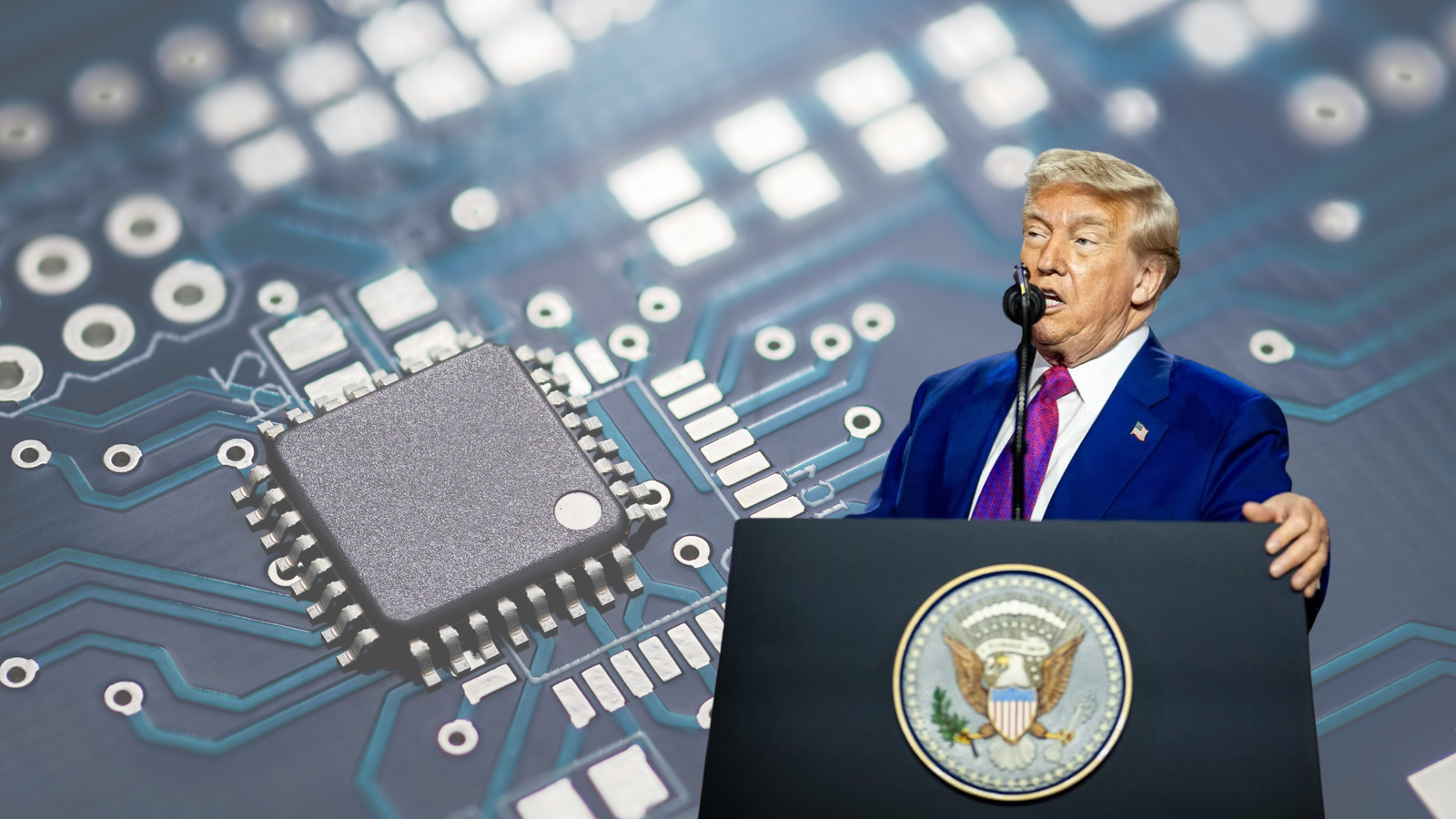
In a move that could shake the global tech and manufacturing industries, former U.S. President Donald Trump has announced plans to impose up to 100% tariffs on imported semiconductor chips, along with a 50% tariff on goods from India. Though not yet formalized, these declarations are already sparking concerns about rising prices in sectors such as electronics, home appliances, automobiles, and digital devices.
What Did Trump Say?
During a recent press interaction from the Oval Office, Trump shared that the new tariffs would apply to all chips and semiconductors entering the United States, with an exception for companies that are manufacturing within the U.S. or are in the process of shifting operations to America.
He stated:
“If for any reason you say you’re manufacturing and you’re not, we will add the tariff, it will accumulate, and we will charge you later. You will have to pay.”
While Trump did not issue an official policy directive, the statement has already made headlines for its potential economic and geopolitical implications.
Who Will Be Affected?
At the moment, it remains unclear which countries or how many chip products will be impacted, as no official list or implementation timeline has been published. However, the announcement hints at a broad application of the tariff policy.
If enforced, the tariffs could hit global electronics supply chains hard, leading to increased costs for:
- Smartphones
- Laptops
- Televisions
- Home appliances
- Electric vehicles (EVs)
- Gaming consoles
- Other digital and AI-based consumer products
Countries like India, Taiwan, South Korea, and China, all major players in chip manufacturing or electronics assembly, could face increased trade barriers if they don’t shift production to U.S. soil.
Who Might Be Exempted?
Trump’s statement clarified that companies manufacturing in the U.S. or investing in American production facilities will not be subject to the new tariffs. This includes Taiwanese semiconductor giant TSMC, which builds chips for tech giants like Nvidia, Apple, and AMD, and already has operational or planned facilities in the U.S.
This could give U.S.-based or U.S.-invested companies a major competitive edge, encouraging further onshoring of manufacturing in the semiconductor industry, a goal that aligns with America’s strategic ambitions in AI, defense, and digital infrastructure.
Impact on Global Economy and Consumers
If the tariffs are officially implemented, they are expected to:
- Increase prices of electronics and digital products for consumers globally
- Pressure manufacturers to relocate or invest in U.S. operations
- Disrupt existing supply chains dependent on Asian semiconductor markets
- Potentially spark retaliatory tariffs or diplomatic tensions
Bryan Jacobsen, Chief Economist at Annex Wealth Management, stated in a report:
“Large, cash-rich companies that can afford to move manufacturing to the U.S. will benefit the most.”
What Lies Ahead?
While Trump’s comments do not yet reflect a legally binding policy, they signal the direction his administration could take if he returns to office. The chip industry, already under stress from geopolitical rivalries, AI demand surges, and supply shortages, is watching closely.
For now, manufacturers, investors, and consumers alike are bracing for what could be another wave of price hikes and market realignments in the global tech industry.
Stay updated with the latest global tech and economy news only on News1928.com