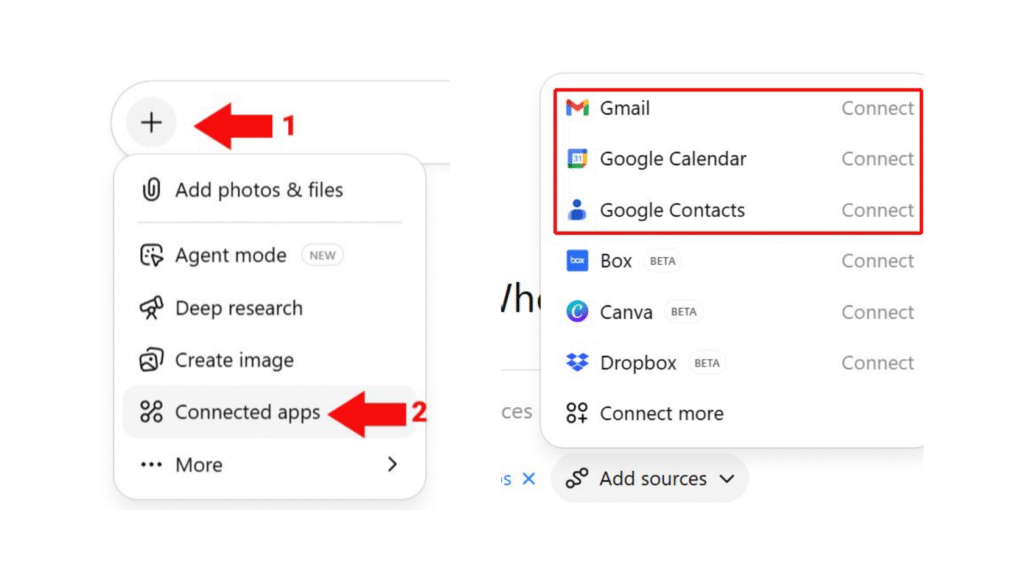
Artificial Intelligence is no longer a futuristic concept reserved for tech companies and research labs. It has entered our homes, our workplaces, and now, our daily routines in ways that feel seamless and surprisingly natural. One of the most groundbreaking examples of this shift is ChatGPT-5’s integration with Gmail, Calendar, and Contacts. This development signals not only a leap in productivity tools but also a transformation in how we interact with technology on a personal level.
In this article, we will explore how ChatGPT-5’s integration with these everyday apps is redefining the way we manage our time, communication, and relationships. Beyond the technical capabilities, we will look at the human side of these innovations, how they make life easier, more organized, and perhaps even a little more meaningful.
The Changing Landscape of Productivity
For decades, productivity tools like email, calendars, and contact books have been essential. Gmail helps us manage communication, Calendar organizes our days, and Contacts keeps track of the people we interact with. But these tools, while powerful, have always relied heavily on manual input and management.
Think about it: we still type out emails, set reminders ourselves, and sort through hundreds of contacts when we need to reach someone quickly. Despite advancements in cloud computing and mobile apps, the experience often feels fragmented. This is where AI, and particularly ChatGPT-5, steps in to bridge the gap.
Instead of us constantly adapting to these tools, AI now adapts to us. ChatGPT-5 doesn’t just assist, it understands context, intent, and priorities, allowing these everyday apps to work more intelligently and intuitively.
Smarter Email with Gmail Integration
Gmail is one of the most widely used communication tools in the world. Yet, it can also be overwhelming. Between newsletters, promotions, work emails, and personal conversations, our inboxes can easily spiral out of control.
With ChatGPT-5 integrated directly into Gmail, email management is transformed. Imagine opening your inbox and being greeted with a concise, AI-generated summary of your most important messages. Instead of scanning through dozens of subject lines, you immediately see what needs attention today, what can wait, and what can be archived.
But the power of this integration goes beyond summarization. ChatGPT-5 can draft responses tailored to your tone and style, ensuring your emails feel personal without requiring hours of effort. For professionals, this means less time spent on repetitive communication and more time focused on meaningful work. For individuals, it reduces the stress of keeping up with a constant stream of digital messages.
For example, if you receive an email about a meeting proposal, ChatGPT-5 can check your Calendar, identify free slots, and even draft a polite reply suggesting a suitable time. It’s not just email, it’s email with intelligence woven into it.
Calendar Becomes a True Personal Assistant
Calendar apps have always promised organization, but in practice, they often feel like digital notebooks where we jot down dates and times. The responsibility of planning, prioritizing, and reshuffling still falls on us.
ChatGPT-5’s integration with Calendar changes that dynamic completely. Now, your calendar behaves less like a static tool and more like a personal assistant that understands your life.
For instance, if you tell ChatGPT-5, “I need to schedule time for exercise three times a week,” it doesn’t just make a note. It analyzes your existing commitments, finds the most realistic windows, and creates recurring events. If a last-minute meeting pops up, it can automatically reschedule your workout without you lifting a finger.
This adaptability extends to more complex scenarios. Planning a family gathering? ChatGPT-5 can coordinate with multiple participants by checking their availability (if shared), propose optimal dates, and send invitations, all while keeping your personal preferences in mind.
The integration makes scheduling less about managing conflicts and more about creating balance. It’s technology serving not just your professional life but your personal well-being.
Contacts with Context
Contacts have traditionally been static lists, names, phone numbers, and maybe a company title. But relationships are dynamic, and the way we interact with people is often nuanced. ChatGPT-5’s integration with Contacts adds an intelligent layer of context that brings those relationships to life.
Suppose you’re preparing for a meeting with a client you haven’t spoken to in six months. ChatGPT-5 can provide a quick recap: when you last communicated, what topics were discussed, and even highlight any important follow-ups that may have slipped through the cracks. Instead of digging through old emails or notes, you step into the meeting prepared and confident.
This integration can also remind you of personal details that matter. Perhaps it notes that a colleague mentioned their child’s graduation last time you spoke. Remembering to ask about it isn’t just good etiquette, it strengthens human connections. By surfacing these insights, ChatGPT-5 helps us nurture relationships in a way that feels thoughtful and genuine.
The Human Touch Behind the Technology
At its core, technology should serve people, not the other way around. What makes ChatGPT-5’s integration with Gmail, Calendar, and Contacts truly remarkable is not the complexity of the algorithms but the simplicity it brings to our daily lives.
We are all seeking more time, time to focus on creative work, time to spend with loved ones, time to simply breathe in a busy world. By reducing the friction of routine tasks, AI frees us to invest our energy where it truly matters.
This doesn’t mean technology is replacing human effort or emotion. On the contrary, it’s enabling us to express those emotions more fully. Writing a thoughtful email becomes easier. Remembering small but meaningful details about a friend feels natural again. Scheduling stops being a source of stress and starts becoming a pathway to better balance.
Potential Concerns and Responsible Use
Of course, with any advancement in AI, questions of privacy and control arise. Giving AI access to Gmail, Calendar, and Contacts means entrusting it with some of our most personal data. For this reason, transparency, security, and user control are non-negotiable.
ChatGPT-5 is designed with safeguards to ensure users remain in control. It does not take independent action without consent. Instead, it offers suggestions, drafts, and reminders, leaving the final decision in human hands. This balance is key to building trust and ensuring AI feels like a partner, not an overseer.
Looking Ahead
The integration of ChatGPT-5 with Gmail, Calendar, and Contacts is only the beginning. As AI continues to evolve, the lines between tools and assistants will blur even further. Imagine a future where your AI not only manages your inbox and schedule but also learns your long-term goals and helps you move toward them in small, daily steps.
But even as the technology becomes more advanced, the human element will remain central. The ultimate measure of success will not be how many tasks AI completes but how much more connected, balanced, and fulfilled people feel as a result.
Conclusion
The arrival of ChatGPT-5’s integration with Gmail, Calendar, and Contacts marks a turning point in the story of artificial intelligence. It takes tools we already use daily and infuses them with intelligence that feels natural, supportive, and distinctly human-cantered.
From decluttering inboxes and simplifying scheduling to adding context to our relationships, this integration reflects the promise of AI done right: technology that fades into the background while amplifying the best parts of our lives.
We stand at the beginning of a new era where AI is not just something we use but something that walks alongside us in our daily routines. And perhaps the greatest gift of this shift is not efficiency or productivity, but the simple rediscovery of time, time for work that inspires us, relationships that ground us, and moments that truly matter.