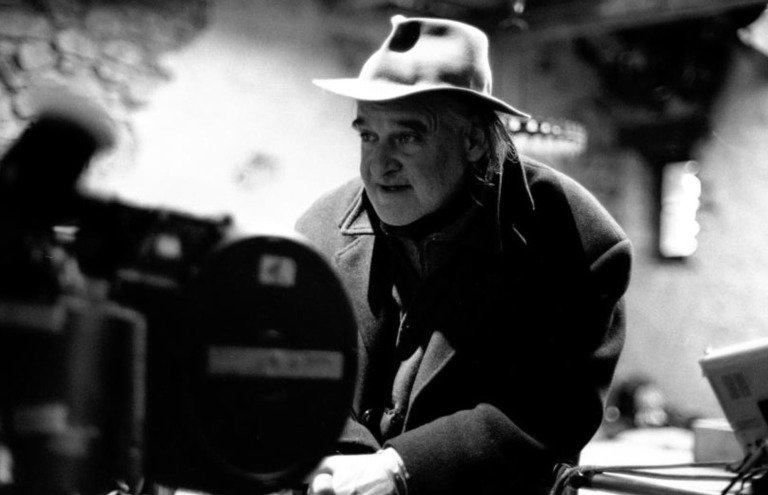
Béla Tarr, the legendary Hungarian filmmaker whose stark, hypnotic films reshaped the language of world cinema, has died at the age of 70. Renowned for masterpieces such as Damnation and Sátántangó, Tarr leaves behind a body of work that challenged narrative conventions and redefined how time, realism, and human despair could be portrayed on screen.
Born in 1955 in Pécs, Hungary, Béla Tarr began making films at a remarkably young age. His early works were rooted in social realism, often focusing on working-class lives and systemic injustice. However, as his career evolved, Tarr moved away from conventional storytelling toward a deeply philosophical and visual style that would later be known as “slow cinema.” Long takes, minimal dialogue, monochrome imagery, and an almost meditative pacing became his signature.
Tarr’s international breakthrough came with Damnation (1988), a bleak yet visually poetic film that explored moral decay and emotional isolation in a rain-soaked, decaying landscape. The film marked the beginning of his long and celebrated collaboration with writer László Krasznahorkai, whose dense, existential prose perfectly complemented Tarr’s cinematic vision.
That partnership reached its most iconic expression in Sátántangó (1994), a seven-and-a-half-hour black-and-white epic that is now considered one of the greatest films ever made. Divided into twelve chapters structured like the steps of a tango, the film depicts the collapse of a rural community through haunting imagery and relentless realism. Though initially daunting for audiences, Sátántangó earned cult status among critics, filmmakers, and cinephiles worldwide, influencing generations of artists.
Unlike many directors, Tarr never sought mainstream appeal. His films demanded patience, attention, and emotional endurance. Yet for those willing to surrender to his rhythm, the experience was transformative. Filmmakers such as Gus Van Sant, Apichatpong Weerasethakul, and Lav Diaz have openly acknowledged Tarr’s influence on their own work.
In later years, Tarr continued to refine his austere style with films like Werckmeister Harmonies (2000) and The Turin Horse (2011). The latter, a bleak meditation on entropy and human futility, was announced as his final feature film. True to his word, Tarr stepped away from directing afterward, choosing instead to focus on teaching and mentoring young filmmakers.
Beyond cinema, Tarr was also known for his outspoken political views and criticism of authoritarianism and cultural decay. He believed cinema should confront reality rather than escape it, a philosophy deeply embedded in every frame he created.
Tributes have poured in from across the global film community, with many calling him not just a director, but a philosopher of cinema. Film festivals, critics, and institutions have credited him with expanding the very boundaries of what film could be.
Béla Tarr is survived by his family and an enduring legacy that will continue to challenge, inspire, and provoke audiences for decades to come. Though his films often depicted despair, his impact on cinema stands as a powerful testament to artistic courage and uncompromising vision.