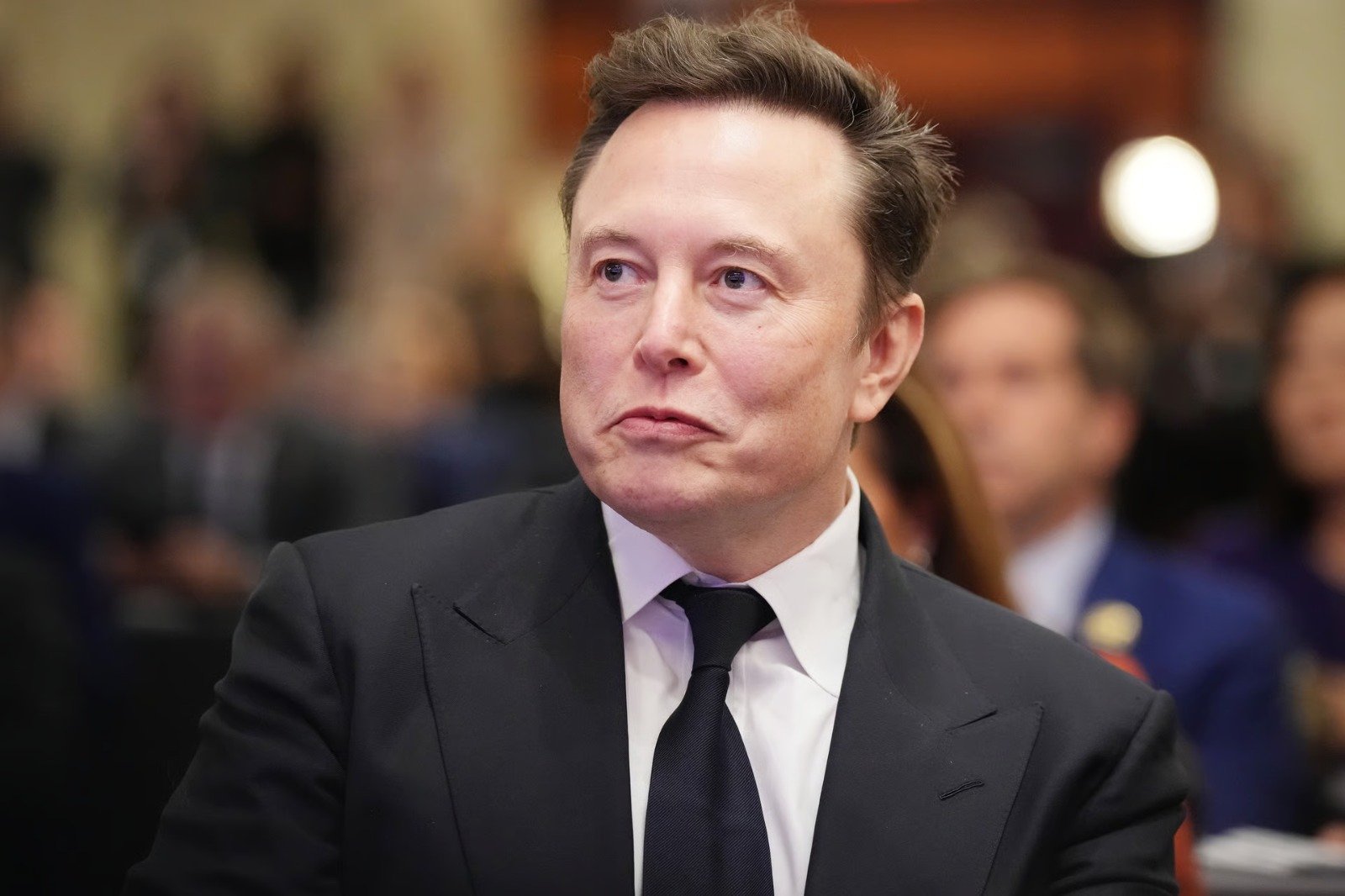
Tech billionaire Elon Musk has sparked fresh debate in the semiconductor and AI community after making a blunt prediction about Nvidia’s next-generation Rubin chips, suggesting they are unlikely to become fully operational before the end of the decade. His remarks have drawn attention not only because of Nvidia’s central role in the global AI boom, but also because Musk himself is deeply invested in AI infrastructure through Tesla, xAI, and SpaceX-linked computing initiatives.
Musk, known for his outspoken views on technology timelines, reportedly said that Nvidia’s Rubin architecture widely expected to succeed the Blackwell platform “won’t be operational before the latter part of the decade,” pushing back against optimistic assumptions circulating in parts of the tech industry. While Nvidia has not officially announced a detailed launch or deployment schedule for Rubin, the architecture is believed to be a cornerstone of the company’s long-term AI and data centre roadmap.
Why Rubin Matters
Nvidia’s future chip architectures are closely watched because the company currently dominates the market for AI accelerators used in training and running large language models. Rubin, named after astronomer Vera Rubin, is expected to deliver significant gains in performance, efficiency, and scalability compared to current-generation chips.
Industry expectations have been high, with some analysts suggesting that Rubin-based systems could arrive sooner than previous generational shifts. Musk’s comments, however, highlight the practical challenges involved in turning advanced chip designs into deployable, large-scale products.
Musk’s Perspective: Engineering vs Hype
Musk has often cautioned against overly optimistic timelines in advanced manufacturing, whether in rockets, electric vehicles, or AI hardware. His skepticism around Rubin appears rooted in the realities of semiconductor fabrication, supply chain constraints, and system-level integration.
“Designing a chip is one thing. Making it work at scale, with software, power, cooling, and yield all aligned, is another,” Musk has said in past discussions on AI infrastructure. Applying that logic, his prediction suggests that while Rubin may exist on paper or in early prototypes, widespread operational use could take much longer.
This view resonates with some industry experts who note that each new generation of AI chips is becoming more complex, more power-hungry, and more dependent on advanced manufacturing nodes that only a handful of foundries can support.
Implications for the AI Race
If Musk’s assessment proves accurate, it could have implications for companies betting on rapid leaps in AI compute capacity. A delayed Rubin rollout would mean continued reliance on existing Nvidia platforms, incremental improvements, and alternative strategies such as custom silicon, AI optimisation, and distributed computing.
For Nvidia, expectations management is crucial. The company has so far maintained its leadership by delivering steady architectural progress, but the gap between announcements, sampling, and real-world deployment has been widening across the semiconductor industry.
Musk’s comments also subtly underscore why companies like Tesla and xAI are exploring in-house chip development to reduce dependence on external timelines and bottlenecks.
Nvidia Yet to Respond
Nvidia has not officially responded to Musk’s remarks, and the company typically avoids commenting on speculative timelines. Historically, Nvidia has delivered new architectures roughly every two years, but recent generations have faced unprecedented demand pressures and manufacturing complexity.
Until Nvidia provides concrete details, Rubin remains a symbol of the next phase of AI computing powerful in promise, but still distant in execution.
Whether Musk’s prediction turns out to be overly cautious or prescient, it has once again highlighted a central truth of the AI era: breakthroughs are not just about ideas, but about the hard, time-consuming work of making them real at scale.