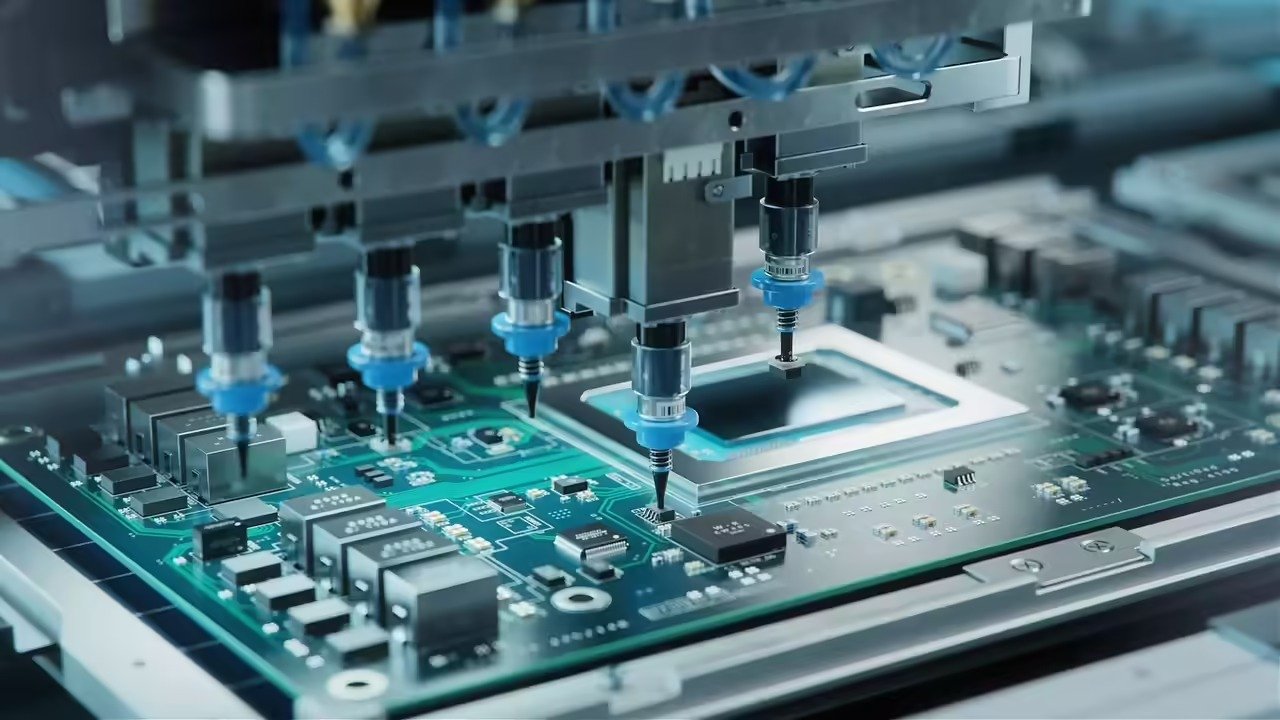
In a major push to strengthen India’s electronics manufacturing ecosystem, the government has cleared 22 electronics components and parts manufacturing projects involving an investment of nearly ₹42,000 crore. The move is seen as a significant step toward reducing import dependence, deepening local value addition, and positioning India as a global hub for electronics production.
The approved projects fall under the government’s broader strategy to expand domestic manufacturing of key electronic components that are currently heavily imported. These include parts used in smartphones, consumer electronics, automotive electronics, industrial equipment, and emerging technologies such as electric vehicles and renewable energy systems.
According to officials familiar with the decision, the projects will be spread across multiple states and are expected to generate substantial employment opportunities, both directly in manufacturing units and indirectly across supply chains. The initiative aligns closely with the government’s “Make in India” and “Atmanirbhar Bharat” vision, which aims to build resilient, self-sustaining industrial capabilities.
Strengthening the Electronics Supply Chain
While India has made notable progress in assembling electronic products particularly smartphones the country still relies heavily on imports for critical components such as printed circuit boards (PCBs), semiconductors, camera modules, connectors, and display-related parts. The newly approved projects are designed to address this gap by encouraging companies to manufacture these components domestically.
Officials say the focus is not only on increasing capacity but also on improving technological depth and quality standards, enabling Indian manufacturers to compete globally. Several projects reportedly involve advanced manufacturing processes and collaborations with global technology partners.
Economic and Strategic Impact
The ₹42,000 crore investment is expected to have a multiplier effect on the economy. Beyond job creation, it is likely to boost exports, attract ancillary industries, and reduce foreign exchange outflows caused by component imports. Industry experts believe this could significantly enhance India’s value addition in electronics from the current levels to much higher over the next few years.
The approvals also come at a time when global electronics supply chains are undergoing realignment, with companies looking to diversify manufacturing away from single-country dependencies. India’s growing market size, policy support, and improving infrastructure have made it an attractive destination for such investments.
Policy Support and Incentives
Many of the cleared projects are expected to benefit from government incentive schemes aimed at electronics manufacturing, including production-linked incentives (PLI) and other targeted support measures. These schemes are designed to offset initial costs, encourage scale, and ensure long-term competitiveness.
Officials stressed that the government will closely monitor the implementation of the projects to ensure timely execution and adherence to investment and employment commitments. Faster clearances, improved logistics, and policy stability are also being highlighted as key enablers for the sector’s growth.
Industry Response
Industry players have welcomed the decision, calling it a “critical milestone” in India’s journey from an assembly-driven electronics market to a component-led manufacturing powerhouse. Analysts note that sustained focus on components is essential for India to move up the global electronics value chain and reduce vulnerabilities in times of global disruptions.
As these 22 projects move from approval to execution, they are expected to play a pivotal role in shaping the next phase of India’s electronics industry one that is more integrated, competitive, and globally relevant.