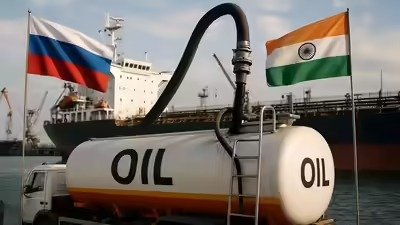
India’s imports of Russian crude oil in December 2025 dropped sharply, falling to their lowest level since February 2025, according to government and trade data. The significant decline comes amid rising geopolitical pressures and shifting global energy dynamics, illustrating how international factors are reshaping India’s energy sourcing strategies.
📉 Sharp Decline in Russian Crude Imports
In December, India imported Russian crude worth approximately ₹2.7 crore ($2.7 billion) a marked decrease and the lowest monthly figure recorded since February 2025, underscoring a significant pullback from earlier months. Officials and analysts attribute this slump partly to Western sanctions on major Russian oil firms like Rosneft and Lukoil, which have disrupted the usual flow of crude supplies.
📊 What the Drop Represents
Russia has historically been one of India’s largest suppliers of crude oil, largely due to discounted pricing compared with Middle Eastern barrels. However, Western sanctions aimed at curbing Moscow’s oil revenues have constrained exports, leading Indian refiners to reduce their purchases and seek alternatives. Data from December showed that imports dropped sharply from earlier in the year with volumes dipping to their lowest levels since early 2025.
🌍 Global Policy and Trade Pressure
The decline comes against a backdrop of increasing global pressure on India to reduce reliance on Russian energy. Sanctions enacted by the US and European Union have made it harder and costlier for Indian firms to navigate international insurance and shipping arrangements for Russian crude. In some cases, refiners have opted to source more crude from OPEC countries and other regions to maintain supply continuity.
🛢️ Impact on Indian Refiners
Major Indian refiners such as Reliance Industries, Indian Oil Corp (IOC), and Bharat Petroleum have already started adjusting their import patterns. Some state-owned facilities reduced Russian crude usage dramatically, while private entities showed more cautious sourcing in response to sanctions and trade policy shifts.
🛠️ Diversification and Supply Chain Shifts
As Russian crude imports declined, India has gradually diversified its crude basket. OPEC producers like Saudi Arabia, Iraq, and the UAE increased their share of Indian imports in December, partly filling the gap left by Russia’s reduced shipments. This comes as refiners aim to secure more stable supply lines amid geopolitical uncertainties.
📍 Broader Geopolitical Context
The slowdown in Russian crude imports also dovetails with broader diplomatic and trade developments. Ongoing discussions between India and Western partners have included energy supply considerations, with incentives to reduce reliance on Russian hydrocarbons while maintaining India’s energy security. However, experts caution that any long-term reorientation will need to balance economic interests, refinery configurations, and global market access.
📌 What This Means Going Forward
Analysts believe December’s low import figures may not signal a permanent end to India’s relationship with Russian crude but they do reflect short-term disruptions driven by sanctions compliance, geopolitical pressure, and strategic diversification. Refiners are expected to continue adjusting their import strategies in early 2026, potentially leading to more balanced sourcing between Russia and other global oil producers.
Overall, December’s data marks a noteworthy shift in India’s energy import landscape and a reminder of how global political and economic forces can rapidly alter even long-standing trade patterns.