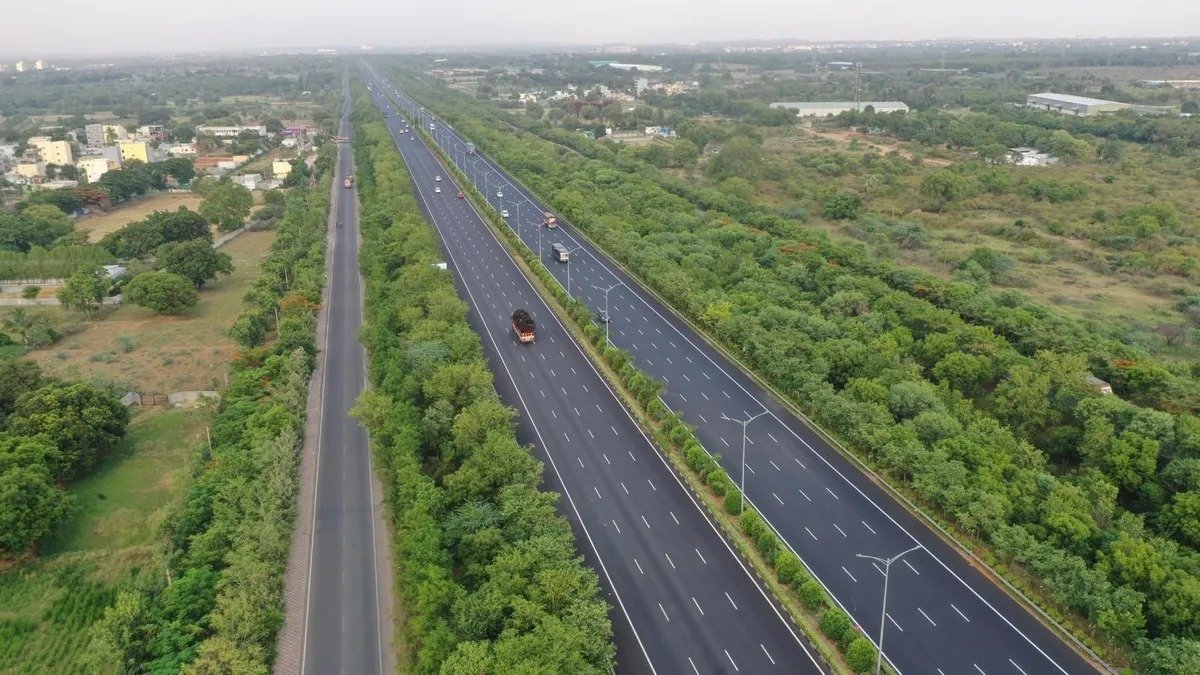
In a major infrastructure push, the Gujarat government has commenced land acquisition for the long-awaited Tharad–Ahmedabad Greenfield Expressway, a project set to dramatically improve connectivity in the northern and central regions of the state. The initiative marks a significant step toward faster travel, economic expansion, and enhanced logistics efficiency across key districts.
The expressway is planned as a high-speed, access-controlled corridor linking Tharad in the northwest near the Rajasthan border with Ahmedabad, Gujarat’s largest city and economic hub. Once completed, the route is expected to cut travel time substantially, boost trade corridors, and spur new urban and industrial development along its alignment.
Strategic Importance and Expected Impact
The Tharad–Ahmedabad Greenfield Expressway is part of Gujarat’s broader infrastructure vision to strengthen transport connectivity, economic corridors, and regional integration. By connecting remote and under-served areas of northern Gujarat directly to Ahmedabad, the expressway aims to:
- Reduce travel time: The new expressway is projected to cut current travel times by more than half, enabling faster movement of people and goods.
- Enhance logistics: Improved freight movement will particularly benefit agricultural and industrial supply chains, including sectors like textiles, manufacturing, and food processing.
- Boost local economies: Urban centres and rural towns along the route are expected to witness increased investment, employment opportunities, and real estate growth.
- Strengthen interstate links: The alignment also supports broader connectivity with Rajasthan and northern India, enhancing interstate commerce.
Officials say that the expressway could transform travel dynamics in the region, making commutes more efficient and safe compared with the existing state and national highways, which are often congested and slower.
Land Acquisition: First Key Milestone
With land acquisition now underway, the project moves into a crucial execution phase. District authorities have begun issuing notifications under relevant land laws, and committees are holding survey and compensation hearings with affected landowners and residents. The process is being handled with an emphasis on fair valuation, transparent procedures, and adequate rehabilitation support, in line with state and national policies.
Local officials have emphasised that the government aims to complete land acquisition efficiently while addressing concerns of farmers, residents, and stakeholders along the route. Compensation rates, livelihood support measures, and dispute resolution forums are being established to ensure smooth progress.
Expressway Features and Design
Preliminary plans indicate that the Tharad–Ahmedabad Greenfield Expressway will be a multi-lane corridor designed for high-speed travel, featuring:
- Smooth alignments and limited access points to ensure uninterrupted movement
- Grade-separated interchanges to minimise traffic delays
- Service lanes and safety features for local access and emergency response
- Drainage, lighting, rest areas, and toll/automation infrastructure
The exact length of the expressway and detailed engineering specifications are expected to be finalised in upcoming months, following detailed project reports and alignment adjustments based on land surveys.
Development Timeline and Funding
State authorities have indicated that the expressway is a priority project under Gujarat’s transportation strategy, with funding being structured through a mix of public investment, developer bids, and potential private partnerships. Early estimates suggest that land acquisition and construction could span the next few years, with completion targeted well ahead of 2030 to support ongoing economic ambitions.
The government is also exploring synergies with other major infrastructure initiatives, such as logistic hubs, industrial parks, and smart city plans that could cluster around the expressway corridor.
Broader Benefits for Gujarat
For residents and businesses alike, the commencement of land acquisition brings a tangible sense of progress. Faster road infrastructure tends to reduce logistics costs, attract new industries, and raise real estate values in adjacent regions. For commuters, it promises safer and more reliable travel; for traders, it unlocks quicker access to markets.