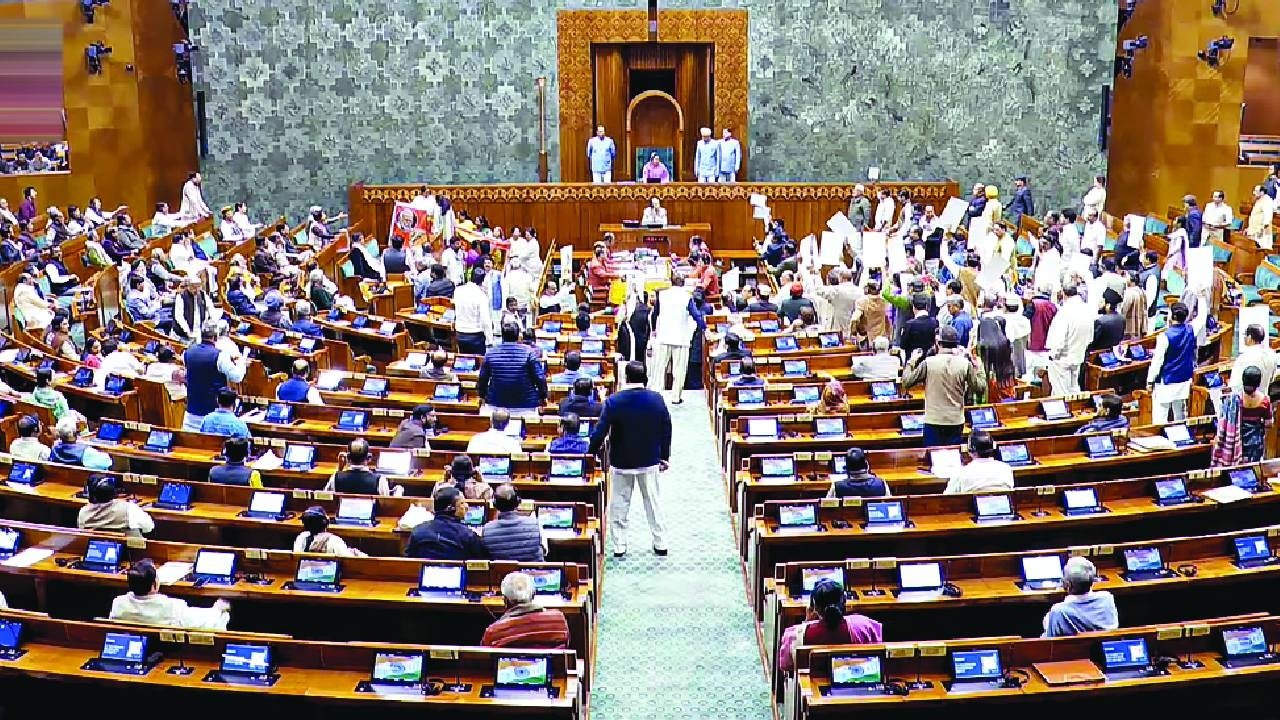
High drama unfolded in the Lok Sabha on Monday as sustained protests by opposition members prevented Prime Minister Narendra Modi from delivering his much-anticipated reply to the Motion of Thanks on the President’s Address. The disruptions, marked by slogan-shouting, placards, and repeated adjournments, brought the House to a near standstill and underscored the deepening political friction in the ongoing Budget Session of Parliament.
As the Prime Minister rose to speak, opposition MPs crowded the well of the House, raising objections over a range of issues, including alleged misuse of central agencies, demands for debates on sensitive political matters, and concerns related to federalism. Despite repeated appeals by the Speaker for order and decorum, the protests continued unabated, forcing the proceedings to be adjourned multiple times.
The Motion of Thanks debate traditionally provides the Prime Minister an opportunity to respond comprehensively to issues raised by members across party lines and to outline the government’s vision and priorities. Today’s disruption meant that a key parliamentary moment often watched closely for policy signals and political messaging remained incomplete.
Parliamentary Affairs Minister expressed strong displeasure over the opposition’s conduct, accusing them of deliberately blocking democratic discussion. “The Prime Minister is accountable to the House and the nation. Preventing him from speaking is an insult to parliamentary traditions,” he said, adding that the government was ready for debate but not disorder.
Opposition leaders, however, defended their protests, arguing that they were left with no option after their repeated demands for detailed discussions were allegedly ignored. “When our voices are not heard through formal procedures, protest becomes the only way to draw attention,” a senior opposition MP said, maintaining that the disruption was a reflection of deeper democratic concerns rather than mere political theatrics.
The Speaker, visibly concerned, reminded members that Parliament is a forum for debate, not disruption. Stressing the importance of mutual respect, she urged all parties to allow the House to function smoothly, warning that continued disorder would undermine public faith in democratic institutions.
Political analysts note that such scenes are becoming increasingly common in Parliament, particularly during high-stakes sessions. While protests are an established part of parliamentary democracy, frequent disruptions raise questions about the effectiveness of legislative functioning and the ability of elected representatives to engage in meaningful dialogue.
Outside Parliament, reactions were mixed. Supporters of the government criticized the opposition for what they described as obstructionist tactics, while opposition sympathisers argued that protests were justified given the issues at stake. On social media, clips of the chaos in the Lok Sabha quickly went viral, sparking widespread debate about parliamentary conduct and accountability.
With the Prime Minister’s reply still pending, uncertainty looms over when or if the discussion on the Motion of Thanks will be concluded smoothly. The government is expected to push for an early resumption of normal proceedings, while opposition parties have signalled that their protests may continue unless their demands are formally addressed.
As the Budget Session progresses, today’s events highlight a growing challenge for India’s parliamentary democracy: balancing the right to protest with the responsibility to legislate. Whether consensus and calm can be restored in the coming days remains to be seen, but the scenes from the Lok Sabha serve as a stark reminder of the intense political currents shaping the national discourse.