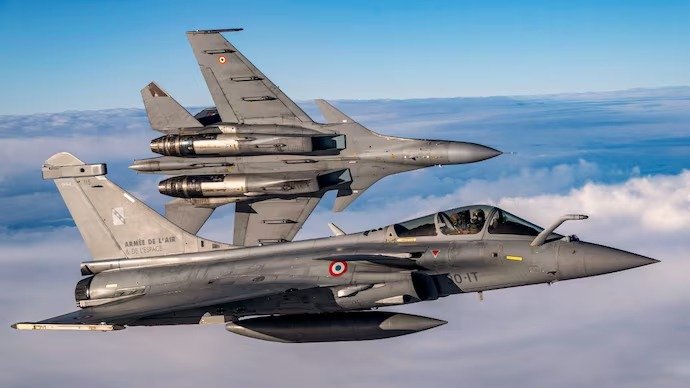
A new independent study by a Switzerland-based strategic research group has concluded that the Indian Air Force (IAF) gained a decisive operational advantage during Operation Sindoor, significantly weakening Pakistan’s military posture and ultimately forcing Islamabad to seek a ceasefire. The report offers a rare third-party assessment of the brief but intense confrontation, highlighting air superiority as the defining factor that shaped the conflict’s outcome.
According to the study, the IAF’s rapid deployment, precision strikes, and dominance of key air corridors disrupted Pakistan’s ability to sustain coordinated military operations. While both sides mobilised quickly following the escalation, analysts noted that India’s air campaign achieved its objectives in a compressed timeframe, limiting the conflict’s spread and raising the costs for Pakistan far sooner than anticipated.
The Swiss researchers emphasised that control of the air domain proved critical. Advanced surveillance, real-time intelligence sharing, and superior mission planning allowed Indian aircraft to neutralise high-value targets while avoiding major losses. The report states that Pakistan’s air defences and response systems were stretched thin, forcing its military leadership into a defensive posture within days of the operation’s launch.
One of the key findings of the study is the psychological and strategic impact of the air campaign. Beyond physical damage, the sustained presence of Indian fighter jets and drones reportedly created uncertainty within Pakistan’s command structure. This, the authors argue, accelerated diplomatic backchannel activity and contributed to Pakistan’s decision to push for a truce before the situation escalated further.
The study also highlights India’s use of integrated warfare tactics, combining air power with cyber monitoring, electronic warfare, and satellite-based reconnaissance. This multi-layered approach limited Pakistan’s situational awareness and reduced its ability to mount effective countermeasures. In contrast, Pakistan’s reliance on conventional responses was described as “reactive rather than adaptive.”
Importantly, the Swiss assessment stops short of endorsing political narratives from either side, positioning itself as a neutral evaluation based on open-source intelligence, satellite imagery, and defence data. However, it does note that the outcome of Operation Sindoor reinforced India’s growing reputation as a regional air power capable of rapid, calibrated military responses without triggering prolonged conflict.
Defence experts quoted in the report suggest that the operation may influence future military doctrines in South Asia. For India, the success of the IAF could lead to greater emphasis on air-led deterrence and swift-response capabilities. For Pakistan, the findings raise questions about air defence preparedness, early warning systems, and the need for doctrinal reassessment in the face of evolving aerial warfare.
The report also touches upon broader geopolitical implications. A swift truce, prompted by military imbalance rather than battlefield exhaustion, sends a strong signal to external observers about India’s ability to control escalation. This, the authors argue, may reshape strategic calculations not only in Pakistan but also among other regional stakeholders monitoring South Asia’s security dynamics.
While official responses from New Delhi and Islamabad remain cautious, the Swiss study adds a significant international perspective to the narrative surrounding Operation Sindoor. By underscoring the decisive role of the Indian Air Force, it reinforces the idea that modern conflicts are increasingly won through air superiority, speed, and technological integration long before traditional ground battles can define the outcome.