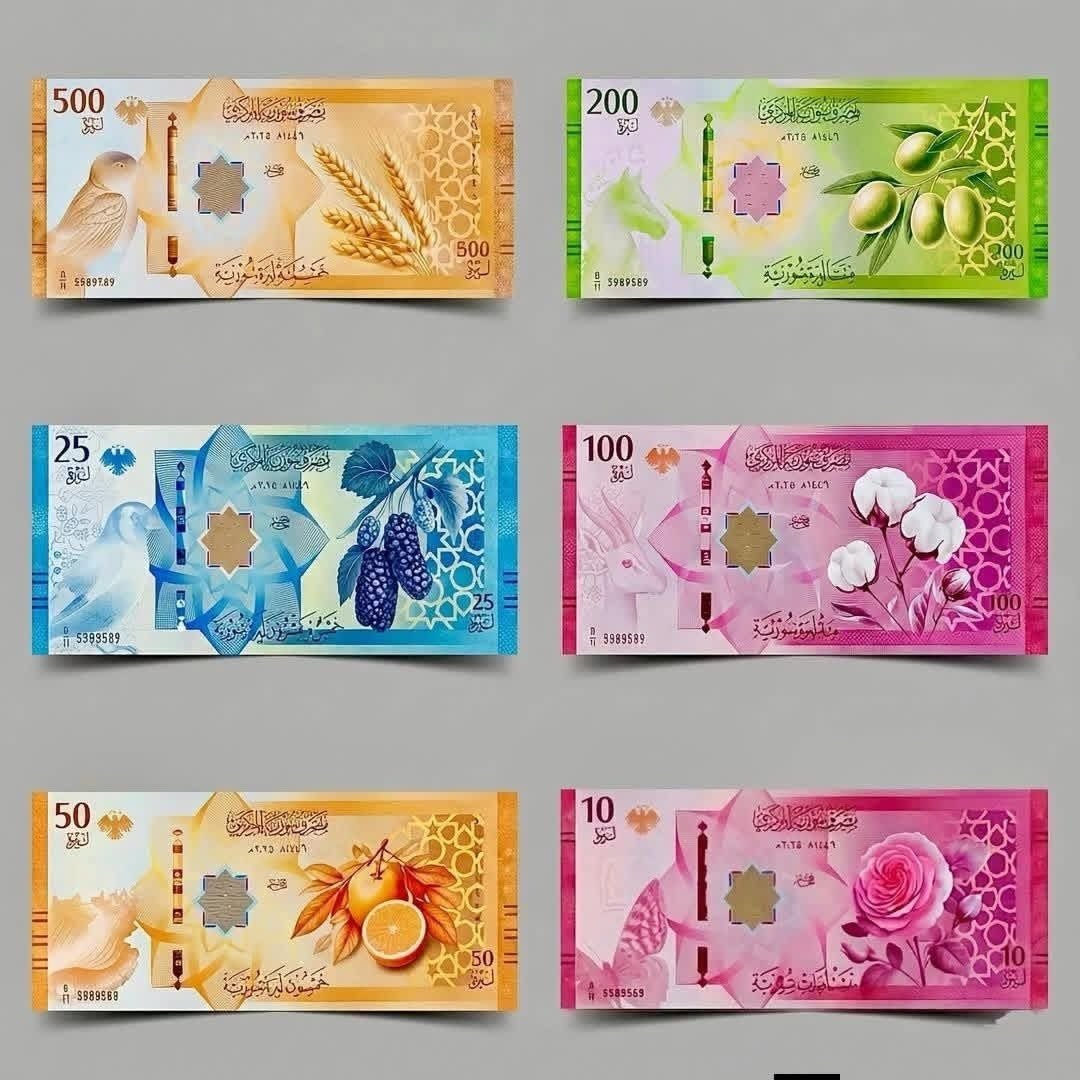
Syria has taken a significant symbolic step in its post-conflict transition by introducing a new series of banknotes that replace designs associated with the decades-long rule of former president Bashar al-Assad. The newly unveiled currency marks one of the most visible efforts by the country’s transitional authorities to redefine national identity and restore public confidence in state institutions after years of political upheaval, war, and economic collapse.
The redesigned banknotes reportedly remove portraits and imagery closely linked to the Assad family, opting instead for national symbols, cultural landmarks, and historical motifs intended to reflect Syria’s broader heritage rather than a single political era. Officials involved in the rollout described the move as both practical and symbolic, emphasizing that currency is not just a medium of exchange but also a reflection of sovereignty, unity, and collective memory.
According to economic officials, the new banknotes will be introduced gradually to avoid disruption in daily transactions. Existing notes will remain legal tender during a transition period, allowing citizens and businesses time to adapt. Banks and exchange offices have been instructed to facilitate smooth replacement while monitoring for counterfeiting and market instability.
Beyond symbolism, the currency redesign is also tied to technical and economic considerations. Years of sanctions, inflation, and shortages have severely weakened the Syrian pound, eroding purchasing power and trust in the financial system. Authorities say the new notes incorporate enhanced security features, including advanced watermarks and holographic elements, aimed at curbing forgery and improving confidence in cash transactions.
For many Syrians, the announcement carries emotional weight. Currency bearing the image or legacy of the Assad era had become a daily reminder of repression, conflict, and economic hardship. Replacing those designs is being seen by supporters of the transition as a psychological reset an attempt to close a painful chapter and signal a different future. Social media reactions from Syrians inside and outside the country suggest cautious optimism, though skepticism remains over whether symbolic changes will translate into tangible economic improvement.
Economists warn that while new banknotes can help rebuild trust, they are not a cure-all. Syria continues to face deep structural challenges, including damaged infrastructure, high unemployment, limited foreign reserves, and restricted access to global markets. Without broader reforms, international engagement, and economic recovery plans, the impact of the new currency may remain largely symbolic.
International observers are watching the move closely. Some analysts interpret the banknote redesign as a message to the global community that Syria is attempting to turn the page and re-enter diplomatic and economic dialogue. Others caution that recognition and support will depend on sustained political reforms and stability, not just visual changes.
For now, the introduction of post-Assad banknotes stands as one of the clearest public signs of change in Syria’s evolving political landscape. As the new currency enters circulation, it carries with it the weight of expectation representing hope for renewal, while underscoring the long and complex road ahead for a nation seeking recovery after years of turmoil.