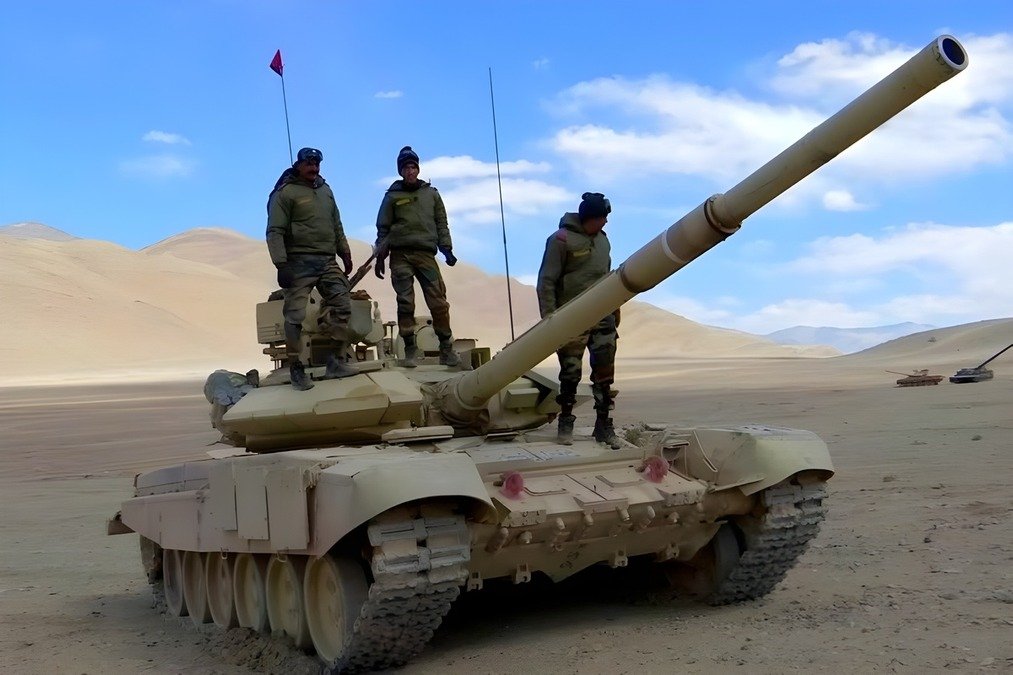
A political and strategic storm has erupted following revelations attributed to former Indian Army chief General M.M. Naravane in his memoir, reigniting debate over one of the most tense moments during the India-China standoff in eastern Ladakh. At the centre of the controversy is a dramatic claim: that Indian and Chinese tanks came perilously close to a direct confrontation on a single night, and that a decision at the highest level helped avert escalation. What exactly happened and why are there now competing narratives?
What Naravane’s Account Claims
According to excerpts from General Naravane’s memoir, during the peak of tensions along the Line of Actual Control (LAC), Chinese armoured units allegedly moved aggressively in a sensitive sector, prompting the Indian Army to deploy its own tanks in response. Naravane suggests that the situation was so volatile that a tank-on-tank clash seemed imminent, and that Indian field commanders were prepared for escalation.
The memoir implies that restraint exercised at the political-military level prevented the confrontation from spiralling into a larger conflict. The account has been interpreted by many as highlighting the seriousness of the crisis and the razor-thin margin between deterrence and disaster.
Government Pushback and Alternate Narrative
Soon after the claims gained public attention, government sources pushed back, questioning both the timeline and interpretation of events described. Officials have argued that while tensions were undeniably high, the situation never reached the point of an imminent tank clash as suggested. They maintain that Indian deployments were defensive, calibrated, and part of a broader posture to prevent Chinese advances not a last-minute reaction to an unexpected provocation.
Some within the strategic establishment have also pointed out that multiple diplomatic and military communication channels were active at the time, including corps commander-level talks and flag meetings, which helped stabilise the situation. From this perspective, the episode is being framed not as a near-accident, but as an example of controlled deterrence.
Why the Disagreement Matters
The disagreement is not merely about historical detail it cuts to the heart of how India interprets and communicates its China policy. Naravane’s version underscores the fragility of peace along the LAC and the real risk of escalation, while the official narrative emphasises institutional preparedness and steady crisis management.
Critics argue that downplaying the severity risks underestimating China’s aggressive posture, while supporters of the government view the pushback as necessary to prevent misinterpretation that could embolden adversaries or alarm the public.
Military Memoirs and Civil-Military Sensitivities
The row has also revived a broader debate about the role of military memoirs in democracies. Retired commanders offering candid accounts can enrich public understanding, but they can also create friction if their recollections diverge from official positions or ongoing diplomatic strategies. In sensitive theatres like the India-China border, even retrospective disclosures can have contemporary implications.
The Larger Strategic Context
What both sides agree on is this: the Ladakh standoff marked a fundamental shift in India-China relations. Trust eroded, forward deployments increased, and the border entered a prolonged phase of militarisation. Whether tanks were minutes away from clashing or firmly held back by layered decision-making, the episode reflects how quickly tactical movements can acquire strategic consequences.
Ultimately, the Naravane memoir row is less about a single night and more about narrative control how India tells the story of one of its most serious security challenges in decades. And as long as the border remains tense, those competing narratives are unlikely to fade.