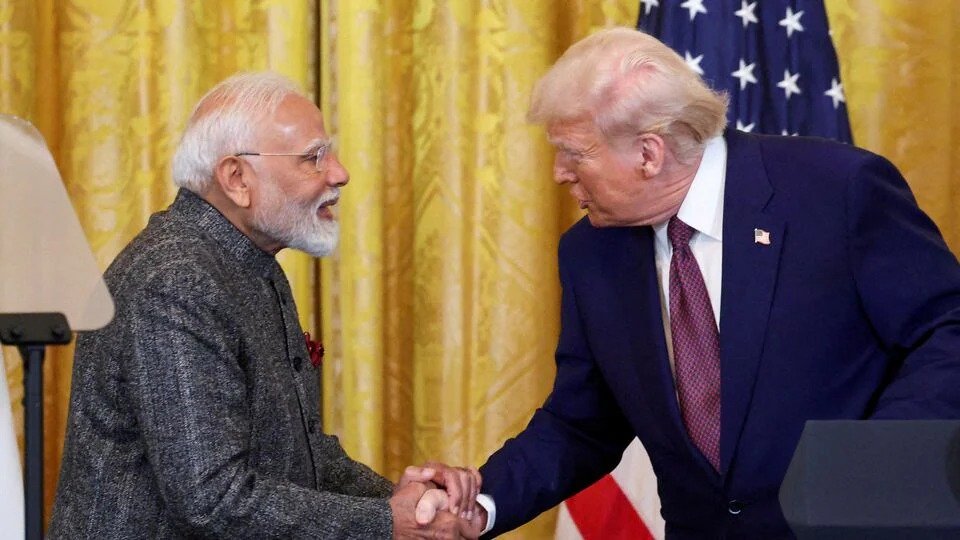
The White House has quietly revised a fact sheet detailing its recent trade understanding with India, removing a specific reference to “certain pulses” that had appeared in the earlier version. The edit has drawn attention from trade watchers and agricultural stakeholders, particularly given the sensitivity surrounding farm imports and tariff concessions between the two countries.
The original fact sheet, released following high-level bilateral trade discussions, had mentioned improved market access for “certain pulses” among the sectors expected to benefit under the evolving agreement. However, in an updated version published later, that phrase was omitted without explanation.
While the broader contours of the trade framework remain unchanged including cooperation in technology, manufacturing, critical minerals, and expanded agricultural trade the removal of the pulses reference has sparked speculation over whether negotiations in that segment are still under discussion or were prematurely disclosed.
Why Pulses Matter
Pulses including lentils, chickpeas, and peas are a politically and economically sensitive commodity in India. The country is one of the world’s largest producers and consumers of pulses, and domestic prices directly impact millions of farmers and consumers.
Any move to expand imports, particularly from the United States, can trigger concerns among farmer groups about price stability and market competition. In past trade discussions, agricultural access has often been among the most complex and contentious aspects of negotiations between Washington and New Delhi.
Trade analysts suggest the initial inclusion of “certain pulses” may have reflected ongoing discussions rather than a finalised commitment. Its removal could indicate that the matter remains unresolved or that both sides agreed to avoid highlighting sensitive agricultural items until details are fully settled.
Diplomatic Nuance at Play
Neither the White House nor Indian officials have issued formal statements specifically addressing the change in wording. However, diplomatic observers note that revisions to fact sheets are not uncommon during evolving negotiations, especially when details are being fine-tuned.
The broader trade engagement between India and the US has gained momentum in recent months, with both sides aiming to deepen economic ties, reduce tariff barriers, and strengthen supply chain resilience. Sectors such as semiconductors, defence cooperation, renewable energy, and digital trade have featured prominently in discussions.
Agriculture, however, remains a delicate area. India has traditionally maintained protective policies for key farm products, while the US has pushed for expanded access for its agricultural exports.
What It Signals
The removal of the pulses reference does not necessarily signal a breakdown in talks. Instead, it may reflect caution in messaging while negotiations continue behind closed doors. Experts say such adjustments are often part of the give-and-take that accompanies complex trade frameworks.
For now, the revised fact sheet maintains a focus on broader economic collaboration, while leaving specific agricultural concessions less clearly defined. As discussions progress, stakeholders on both sides will be watching closely to see whether pulses and other farm products ultimately feature in the final contours of the trade deal.