


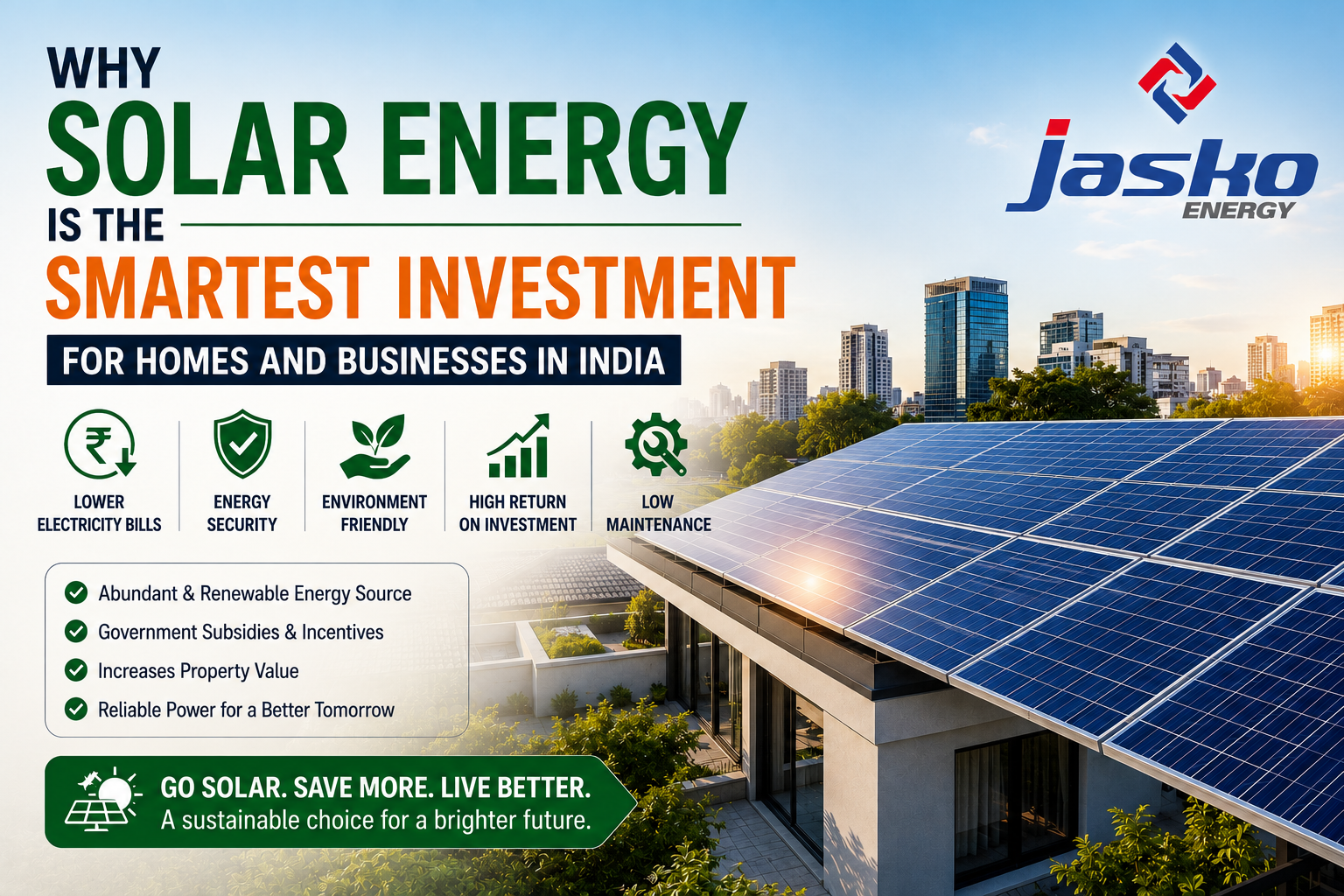
India is experiencing a growing demand for electricity as residential communities, commercial establishments, and industries continue to expand. At the same time, rising energy expenses and increasing awareness about environmental sustainability are encouraging people to explore alternative energy sources.
Among the available renewable energy options, Best Solar Company In Ahmedabad has emerged as a practical and promising solution. With abundant sunlight available across many parts of India, solar power offers homeowners and businesses an opportunity to generate electricity while reducing their dependence on conventional energy sources.
Whether you own a residential property, operate a commercial building, or manage an industrial facility, installing a suitable solar system can be a valuable long-term decision.
Why Is Solar Energy Becoming Popular in India?
Solar energy uses sunlight to generate electricity through photovoltaic (PV) panels. These panels convert solar radiation into electrical energy, which can be used to power homes, offices, factories, and other facilities.
Several factors are contributing to the increasing adoption of solar power.
First, electricity consumption continues to grow across different sectors. Second, property owners are becoming more interested in managing their energy expenses. Third, renewable energy technologies are becoming more accessible, creating new opportunities for residential and commercial users.
Solar power also helps reduce dependence on electricity generated from fossil fuels, contributing to a cleaner energy mix.
Benefits of Installing a Residential Rooftop Solar System
Homeowners can benefit from rooftop solar installations in several ways.
1. Potential Reduction in Electricity Bills
A properly designed solar system can generate electricity for household consumption. Depending on the system capacity, electricity usage, sunlight availability, and applicable billing arrangements, homeowners may reduce the amount of electricity they purchase from the grid.
2. Better Use of Available Rooftop Space
Residential rooftops often provide unused space that can be utilized for solar panel installation. With proper planning, a rooftop solar system can convert this available area into a source of renewable electricity.
3. Long-Term Energy Planning
Electricity expenses are an important part of household budgets. Solar installations allow homeowners to generate a portion of their electricity requirements and plan their energy consumption more effectively.
4. Environmentally Responsible Living
Solar energy generates electricity without direct combustion during operation. Using solar power can help reduce the carbon footprint associated with conventional electricity consumption, depending on the electricity mix it replaces.
Why Commercial Solar Installation Makes Business Sense
Electricity is a major operational expense for many businesses. Manufacturing units, warehouses, offices, shopping complexes, and educational institutions may consume substantial amounts of power.
Commercial solar installations offer an opportunity to manage these expenses through on-site electricity generation.
For example, factories with suitable rooftop areas can install solar panels to support daytime electricity consumption. Offices and commercial buildings can also explore solar systems to improve energy efficiency and sustainability.
Some important advantages include:
- Potential savings on electricity expenses.
- Reduced dependence on grid electricity during solar generation hours.
- Better long-term energy cost planning.
- Support for corporate sustainability initiatives.
- More efficient utilization of available rooftop or project land.
However, every commercial installation should be designed after evaluating electricity consumption patterns, available space, system capacity, and financial feasibility.
Choosing the Best Solar Installation Company In Ahmedabad
Selecting a reliable solar installation partner is an important step in any solar project.
A solar system is a long-term investment, so customers should evaluate the service provider carefully rather than choosing only on the basis of initial pricing.
Here are some important factors to consider.
Experience and Expertise: Review the company’s experience in residential, commercial, and industrial solar installations.
Technical Assessment: A professional solar provider should evaluate the property, electricity consumption, rooftop conditions, and installation requirements before recommending system capacity.
Quality of Components: Solar panels, inverters, mounting structures, cables, and protection equipment should meet appropriate technical specifications.
Project Execution: Proper planning, installation practices, electrical safety, and commissioning are important for reliable system performance.
Documentation and Approvals: Understand the applicable permissions, documentation, grid connection requirements, and subsidy eligibility before proceeding.
After-Sales Support: Maintenance guidance and technical assistance can help maintain the system over its operating life.
Understanding Turnkey Solar EPC Services
Turnkey solar EPC stands for Engineering, Procurement, and Construction. It refers to an integrated approach in which a service provider manages major stages of a solar project.
These stages generally include initial assessment, engineering design, component procurement, installation, testing, and commissioning.
For commercial and industrial customers, turnkey solar EPC services can simplify project coordination by bringing multiple activities under one service provider.
Proper project planning is particularly important for large installations because system design, structural suitability, electrical infrastructure, and safety requirements must all be considered.
Ground-Mounted Solar Projects for Large-Scale Energy Generation
Not every solar project needs to be installed on a rooftop. Ground-mounted solar systems are suitable for locations where sufficient land is available.
These systems are commonly considered for industrial facilities, agricultural applications, utility-scale projects, and large commercial developments.
Ground-mounted installations offer flexibility in system layout and orientation. Their design should consider land conditions, sunlight exposure, drainage, access for maintenance, structural requirements, and electrical infrastructure.
A detailed feasibility assessment helps determine whether a ground-mounted solar project is appropriate for a particular location.
Solar Panel Quality and the Importance of Proper Installation
Solar panels are one of the most important components of a photovoltaic system. Their quality and performance influence the amount of electricity a system can generate.
However, selecting suitable panels is only one part of the process. Inverter compatibility, mounting structures, wiring, system orientation, shading, and installation quality also affect overall performance.
Regular inspection and maintenance can help identify issues such as dust accumulation, loose connections, or equipment-related problems.
Property owners should also understand the warranty terms and performance specifications of the components installed in their systems.
Government Support and Solar Subsidy Assistance
Government initiatives and applicable subsidy schemes can make eligible residential solar installations more financially accessible.
However, subsidy eligibility, financial assistance, system capacity limits, and application procedures depend on the prevailing government guidelines.
Customers should always verify current scheme details through official government portals and authorized channels before making financial decisions.
Working with an experienced solar service provider can help customers understand the documentation and process involved in eligible installations.
Why Consider Jasko Energy for Solar Solutions?
Choosing an experienced solar partner can make the transition to renewable energy easier.
Jasko Energy provides solar solutions for residential, commercial, and large-scale projects, including turnkey ground solar services, ground-mounted solar parks, and solar panel manufacturing.
With experience in the Gujarat solar market and a focus on end-to-end project execution, the company aims to help customers explore suitable solar energy solutions for their requirements.
Whether you are considering rooftop solar for your home or a larger installation for your business, a professional assessment can help you understand the available options.
Conclusion
Solar energy is becoming an increasingly important part of India’s energy future. For homeowners, it offers an opportunity to generate renewable electricity and potentially manage household energy expenses. For businesses, commercial solar installations can support operational cost planning and sustainability goals.
The success of a solar project depends on appropriate system design, quality components, professional installation, and reliable maintenance support.
By choosing the right solar technology and an experienced installation partner, property owners can take a meaningful step toward cleaner and more efficient energy consumption.
Company Name: Jasko Energy (Geetanjali Industries)
Contact Number: +91 81407 08881
Email: info@jaskoenergy.com
Address: 306, 3rd Floor, Rashmi Business Hub, S.P. Ring Road, Odhav, Ahmedabad, Gujarat, India – 382415.
Website: https://www.jaskoenergy.com/


