


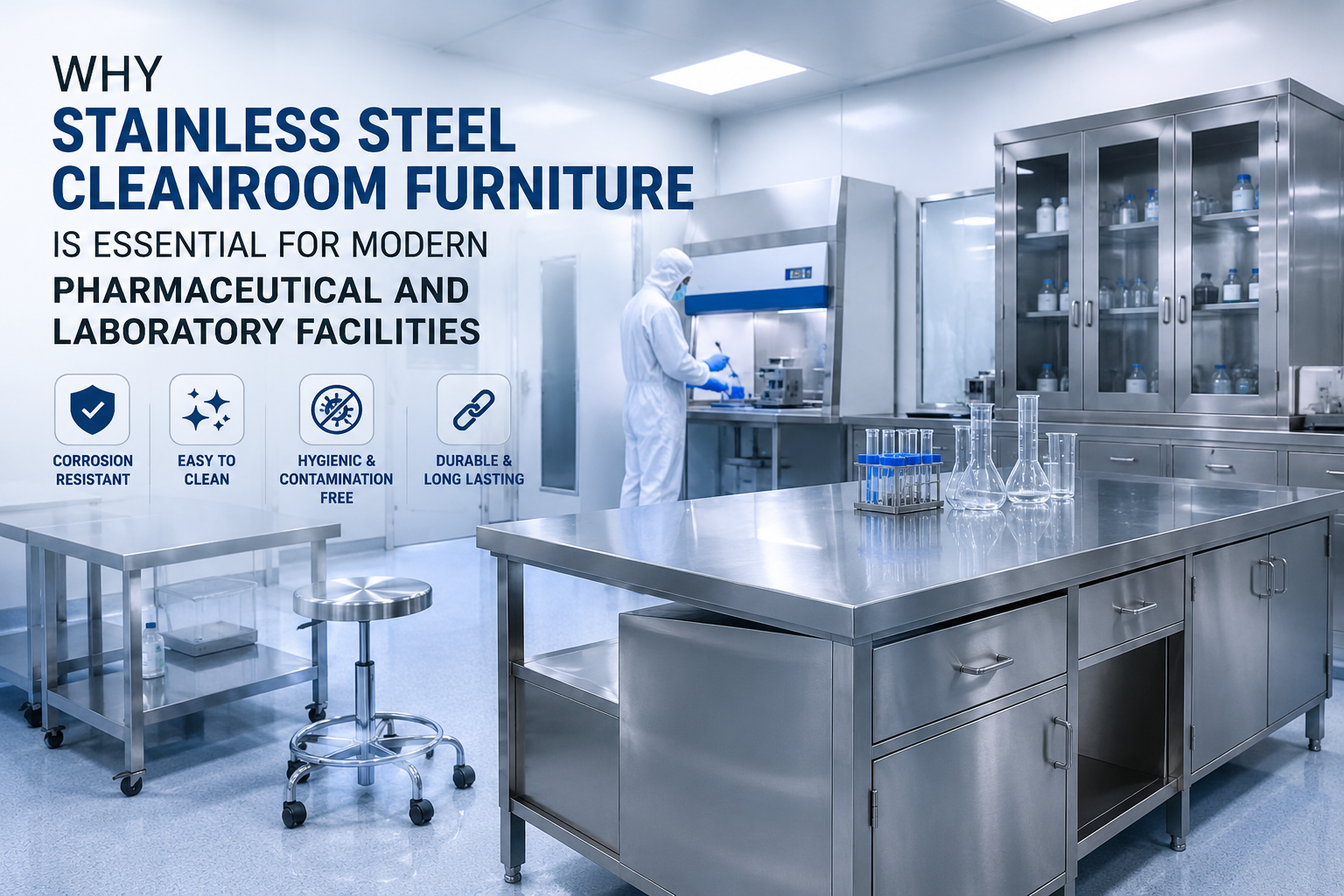
Modern pharmaceutical and laboratory facilities require more than advanced machinery and skilled professionals. They also need carefully designed workspaces that support hygiene, safety, efficiency, and contamination control. One of the most important elements of these environments is furniture. From laboratory workstations to storage cabinets, every piece of furniture plays a role in maintaining an organized and controlled working environment.
This is why stainless steel cleanroom furniture has become an important choice for pharmaceutical companies, biotechnology facilities, research laboratories, and healthcare industries.
Understanding the Importance of Cleanroom Furniture
Cleanrooms are specially designed environments where airborne particles, dust, and other contaminants must be controlled. These facilities are commonly used in pharmaceutical manufacturing, medical equipment production, electronics, and scientific research.
Regular furniture may not always be suitable for such environments because certain materials can deteriorate, accumulate dust, or become difficult to clean. Cleanroom furniture is specifically designed to address these challenges.
Stainless steel furniture offers a smooth, durable, and easy-to-maintain surface. Its properties make it a practical material for facilities where cleanliness and operational reliability are important.
Why Stainless Steel Is Preferred for Cleanroom Applications
Stainless steel is widely used in industrial and laboratory environments because of its useful physical properties.
1. Easy Cleaning and Maintenance
Cleanliness is a major requirement in pharmaceutical and laboratory environments. Stainless steel surfaces are generally smooth and easy to wipe down using suitable cleaning procedures. This makes routine maintenance more convenient and helps facilities follow their established hygiene protocols.
2. Corrosion Resistance
Laboratories and pharmaceutical facilities may use different cleaning agents and chemicals. Appropriate stainless steel grades offer good corrosion resistance, helping furniture maintain its performance over time when selected and maintained correctly.
3. Durability and Strength
Laboratory furniture must support regular equipment handling, storage, and daily operations. Stainless steel furniture offers structural strength and durability, making it suitable for demanding working environments.
4. Professional and Organized Appearance
A well-designed laboratory improves workflow and creates an organized working environment. Stainless steel furniture provides a professional appearance while supporting practical storage and workstation requirements.
Different Types of Stainless Steel Cleanroom Furniture
Every cleanroom has different operational requirements. Selecting suitable furniture depends on available space, workflow, equipment, and storage needs.
Some commonly used products include:
Cleanroom Tables: These tables provide dedicated work surfaces for different cleanroom activities. Their design should support easy cleaning and convenient access for employees.
Cleanroom Lockers: Lockers help employees store personal belongings and designated workwear separately from operational areas.
Cleanroom Cross Over Benches: These benches help establish a designated transition point between different areas, supporting organized entry and footwear-changing procedures.
Cleanroom Cabinets: Storage cabinets help protect tools, materials, and essential supplies while keeping workspaces organized.
Cleanroom Storage Racks: Racks provide structured storage for equipment and materials, making better use of available floor space.
Cleanroom Chairs and Stools: Ergonomically designed seating can improve employee comfort during extended working periods.
Cleanroom Trolleys: Stainless steel trolleys make it easier to transport materials and equipment between designated work areas.
The Role of Laboratory Furniture in Research and Development
Laboratories require furniture that supports precision, organization, and safety. Researchers regularly work with instruments, samples, chemicals, and sensitive equipment. Therefore, furniture selection should consider both the nature of the work and the requirements of the facility.
Laboratory furniture may include workbenches, chemical storage cabinets, glassware storage cabinets, fume hoods, and anti-vibration tables.
For example, chemical storage cabinets help provide designated storage for compatible chemical materials, while fume hoods are designed to support appropriate containment and ventilation during specific laboratory procedures.
Anti-vibration tables are useful for applications involving sensitive instruments that require a stable working surface.
Choosing appropriate laboratory furniture can help improve workflow and make the working environment more organized.
Factors to Consider When Choosing a Cleanroom Furniture Manufacturer
Selecting the right manufacturer is an important decision for pharmaceutical and laboratory businesses. Buyers should evaluate several factors before making a purchase.
Material Quality: Check the stainless steel grade and material specifications to ensure they suit the intended application.
Manufacturing Capabilities: Look for manufacturers with suitable fabrication facilities, technical expertise, and quality-control procedures.
Product Range: A manufacturer offering different types of cleanroom and laboratory furniture can make it easier to maintain consistency across a facility.
Customization Options: Different cleanrooms have different dimensions and layouts. Custom-designed furniture can help optimize available space.
Quality Assurance: Review manufacturing processes, certifications, inspection practices, and product documentation before selecting a supplier.
After-Sales Support: Reliable communication and service support are important for long-term operational requirements.
How the Right Furniture Improves Operational Efficiency
Well-planned furniture arrangements can make everyday laboratory activities easier. Properly positioned tables reduce unnecessary movement, while organized cabinets and racks help employees locate materials efficiently.
Dedicated storage areas also reduce workspace clutter. Similarly, suitable trolleys can simplify material movement and improve workflow between departments.
When furniture is selected according to the facility’s actual requirements, it becomes an important part of an efficient workplace rather than simply an additional expense.
Conclusion
Stainless steel cleanroom and laboratory furniture plays an important role in modern pharmaceutical, healthcare, and research facilities. Its durability, ease of maintenance, and practical design make it a suitable option for controlled working environments.
Businesses planning a new laboratory or upgrading an existing cleanroom should carefully evaluate material quality, product design, manufacturing capabilities, and long-term maintenance requirements.
Working with an experienced cleanroom furniture manufacturer can help organizations identify suitable solutions for their operational needs and create more organized, efficient, and professional facilities.
Company Name: Neptune Pharma Equipments Pvt. Ltd. (Neptune Steel Furniture)
Contact Person: Mr. Krunal Panchal
Contact Numbers:
- +91 84900 91748
- +91 90990 21748
- 079-48931748
Email:
Address: Block A-No. 01, Shyam Hari Industrial Estate, Near Benzo Product, Plot No. 3202, Phase-4, G.I.D.C. Vatva, Ahmedabad, Gujarat, India – 382445.


